The Fire and The Fist:North Kerala's Theyyam and Kalaripayattu Heritage Trail (A Guide for the Responsible Explorer)
Introduction: Journey to Malabar—Where Gods Still Walk
North Kerala, a mesmerizing coastal stretch often designated as North Malabar, stands apart as a region where ancient religious practices are not historical relics but vibrant, daily affirmations of faith. 1Sahapedia — Theyyam: An overview of North Malabar ritual traditions This territory, encompassing the districts of Kannur and Kasaragod, is the sole domain of two powerful cultural pillars: Theyyam, the ultimate ritualistic art form, and Kalaripayattu, the revered mother of all martial arts. For the conscientious traveler, this region offers a profound spiritual journey into the heart of Kerala’s intangible heritage.
The experience centers on understanding this cultural immersion through a humane lens, prioritizing reverence and understanding over mere spectating. Theyyam, derived from the word Daivam meaning God, is a blend of dance, music, and fervent devotion, based on the belief that immortal spirits enter mortal bodies to perform a ritual dance of divine revelation. 2Gilles Tarabout — Secret Gods: Rituals and Popular Religion in Kerala, Manohar, 1986 Parallel to this living divinity is Kalaripayattu, a holistic discipline integrating combat skills with spiritual growth and ethical philosophy. 3Phillip B. Zarrilli — When the Body Becomes All Eyes, Oxford University Press, 1998 This guide prepares the explorer for an authentic engagement with North Malabar, navigating the schedules, folklore, and sacred protocols required to successfully experience these foundational traditions.
Part I: Embodied Divinity – The Deep Folklore and Mysticism of Theyyam
Theyyam, also known as Kaliyattam, is recognized as an integral part of Kerala’s intangible heritage, synthesizing ritualistic dance, instrumental music, elaborate painting, and oral literature. For the local population, this ritual provides a direct channel for communication with deities, ancestral spirits, and heroes, from whom blessings and counsel are sought. 4Kerala Folklore Academy — Theyyam documentation and field reports
1.1 The Syncretic Tapestry of Theyyam Origins
Theyyam is fundamentally rooted in ancient South Indian spiritual practices, having evolved from ancestor worship and the propitiation of local spirits, heroes, and deities. The historical evidence suggests that a vast majority of the Theyyam deities trace their origins to the Thiyya and Nair castes. 5K. K. Nair — Theyam: Studies in Ritual and Oral Traditions, 2010 The elaborate dance ritual seen today evolved by incorporating many local beliefs, providing a prime example of the religious evolution of modern Hinduism.
This art form vividly illustrates the long-term assimilation process where local traditions were integrated into the larger systems of Hinduism, such as Shaivism and Shaktism. Goddesses like Rakteshwari, Chamundi, and Kurathi, alongside gods like Vishnumoorthi, are propitiated in household shrines, distinct from Brahmanical temple rituals. Unlike structured temple rituals led by priests, Theyyam is performed in sacred groves (Kavus) by designated hereditary communities, such as the Malayar and Vannan. The Thiyyar community historically retains the right to cancel any Theyyam performance if deemed necessary. 6M.V. Vishnu Namboothiri — Field studies on Kavus and hereditary performers (Kerala Sahitya Akademi)
The fact that castes which adopted Brahmanical customs often relinquished their traditional roles (kulam and kulacharam) in Theyyam upon integrating into the Vedic fold underscores a crucial point: Theyyam serves as a living, dynamic repository of North Malabar’s social history. By retaining the spiritual authority among non-Brahmanical groups, the tradition actively preserved the pre-Vedic spiritual landscape and indigenous roots, documenting the socio-religious fusion that defines the region today. The sheer diversity of Theyyam—approximately 400 types—is a direct consequence of this sustained syncretism. 7A.K. Alexander — Folklore of North Malabar, 2012
1.2 Legends of North Malabar’s Pantheon
The Valiant Warrior: Kathivanoor Veeran
The Kathivanur Veeran is a powerful representation of heroism and loyalty. This ritual enshrines the heroic spirit of Mandhappan Chekavar, a warrior of the Thiyya community renowned for his bravery. His story is celebrated through martial vigor and folk ballads. In recent times, however, the folklore has shown signs of evolving; the younger generation of Thiyyar has discontinued certain historical, strenuous rituals, such as the practice of the Theyyam walking kilometers to ancestral households that had allegedly betrayed and killed the hero. This shift highlights the dynamic nature of tradition, constantly negotiating between ancient observance and contemporary social life. 8Sahapedia / field essays on Kathivanoor Veeran
The Protector of Dharma: Vishnumoorthi Theyyam
Vishnu Murthy Theyyam is the most popular Vaishnava Theyyam. It vividly narrates and performs the classic Puranic story of Vishnu's descent as the man-lion avatar, Narasimha, to defeat the demon Hiranyakashipu. Because of this association, Vishnumoorthi is also referred to as Narasimhamoorthi.
Beyond the pan-Indian scriptural context, the legend of Vishnumoorthi also contains local historical significance. To some, the narrative symbolizes the god’s migration from the Tuluva region (Mangalore, Karnataka) to Kolathunadu in North Malabar. This folklore suggests an assimilation of a deity popular in the Tuluva region in the 13th century, possibly linking the deity's origin to the deification of the Hoysala ruler Vishnuvardhana, who was prominent during that time. Therefore, witnessing Vishnumoorthi Theyyam means experiencing a synthesis of major Vaishnava scripture with specific local migration history and the incorporation of hero-worship into a prominent folk deity. 9Tuluva-Kerala cultural migration studies — regional folklore journals
Other Key Deities
North Malabar’s cultural landscape is guarded by fiercely protective deities. These include powerful Mother Goddesses like Puthiya Bhagavathy, worshipped for protection and justice, often associated with social transformation. The Puthiya Bhagavathy Theyyam is notable at locations such as the Puthiya Kunnathu Puthiya Bhagavathy Temple in Narikkodu, Kannur. Similarly, Muchilottu Bhagavathy is revered for prosperity and divine protection. The pantheon also includes ancestral figures, such as Vayanattu Kulavan, a revered hunter-deity symbolizing strength and the spirit of nature. 10Kerala temple registers & local ethnographies (Kannur district archives)
1.3 The Ritual of Sacred Transformation
The powerful visual and emotional impact of Theyyam is only possible through an intense, multi-stage ritual of transformation, which is sacred labor in itself.
The process begins not with dance, but with Thottam, a poetic oral narration sung in Malayalam. During this invocation, the artist, still in a semi-human state, recites the mythology of the deity, accompanied by drums, cymbals, and wind instruments. The Thottam is crucial, as it serves to invoke the spirit and prepare both the performer and the audience for the divine transcendence that is about to occur. 11Thottam studies — M.V. Vishnu Namboothiri & oral-patta collections
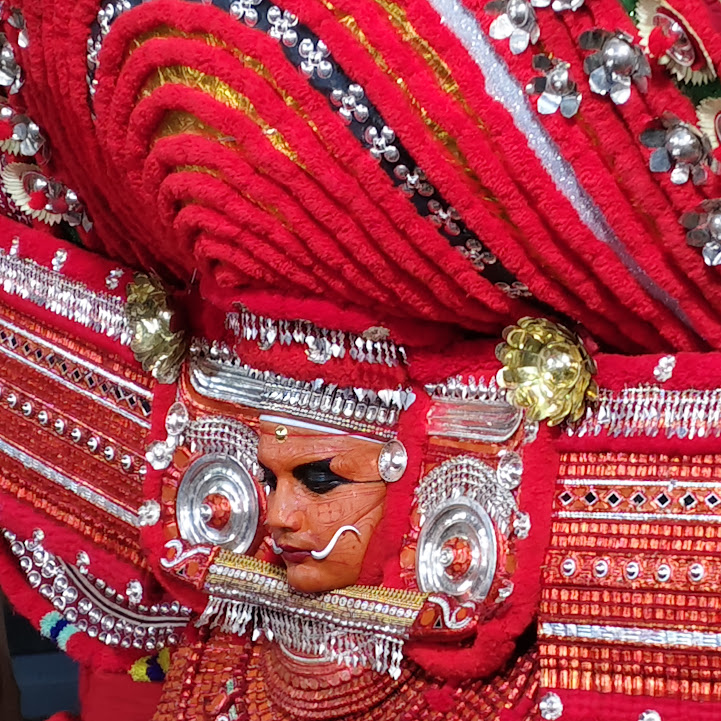
Following the invocation is the meticulous process of Mukhathezhuthu (facial painting), an elaborate transformation that can take hours. This labor embodies the performer's dedication, treating the preparation itself as a sacred offering. Each color, motif, and pattern applied holds precise symbolic significance, reflecting the deity’s specific attributes. Understanding that the hours of preparation are a ritual, not merely an aesthetic application, is fundamental to respecting the tradition. This intensive makeup process, alongside the intricate headgear, special costumes, and unique ornaments, is the spiritual imbuing of physical elements with divine energy, preparing the performer for the trance state necessary to become the deity. 12Ethnographic studies on Mukhathezhuthu and ritual dress — regional folklore reports

Vishnumurthy theyyam Mukhathezhuth
Part II: The Sacred Science – Kalaripayattu, Body, Spirit, and Weapon
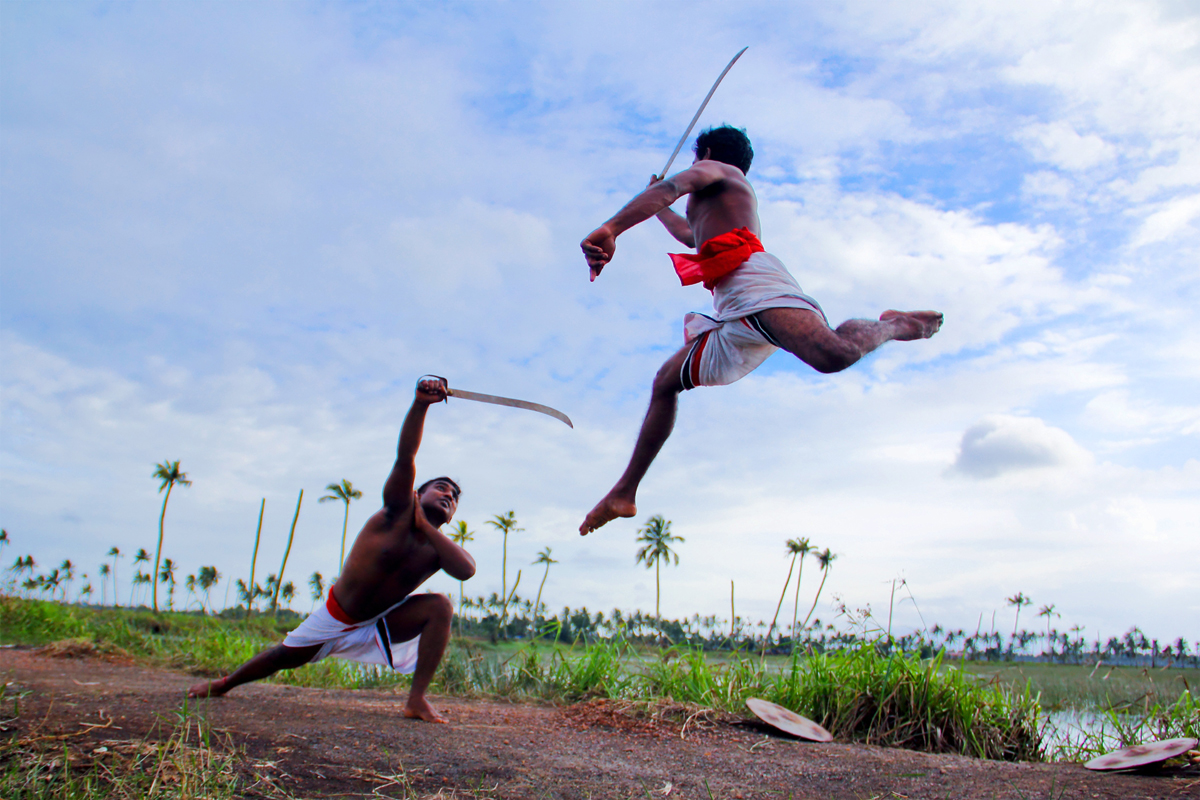
Kalaripayattu, frequently cited as the "mother of all martial arts," is a comprehensive discipline that transcends self-defense, embracing spirituality, wellness, and ethical conduct. It is a foundational element of Kerala's spiritual and historical narrative. 13Phillip B. Zarrilli — Kalaripayattu studies and performance theory
2.1 The Divine Architecture of Combat
The origins of Kalaripayattu are steeped in mythology. Most foundational legends credit Lord Shiva as the original source of the art form. The tradition also speaks of Sage Agastya, who is said to have received this celestial wisdom directly from Shiva and is particularly associated with the Southern styles of Kalaripayattu. 14Agastya legends and regional martial traditions — folklore compendia
The most pervasive foundational legend credits Parasurama, the sixth incarnation of Lord Vishnu, with establishing the practice. It is believed that Parasurama reclaimed the land of Kerala from the sea and opened 108 kalaris where he taught combat skills. This myth links the art’s existence to the creation of Kerala, elevating its cultural significance. 15Kerala creation myths & Parasurama legends — classical sources
Furthermore, Kalaripayattu holds a unique position in global martial arts lore due to the Bodhidharma Connection. Folklore narrates that Bodhidharma, a Buddhist monk from South India, trained in Kalaripayattu before traveling to China where he inspired Shaolin Kung Fu. This powerful narrative positions Kalaripayattu as a globally significant cultural progenitor. 16Debates on Bodhidharma and martial diffusion — martial arts history journals
2.2 Spirituality and Discipline within the Kalari
Courtesy: Ginu Plathottam, CC0, via Wikimedia Commons
For practitioners, Kalaripayattu is incomplete without spirituality; it is defined as a journey of self-discovery and connection to the divine. The training space, known as the Kalari, is sacred.
The Puthara Altar and Sacred Rituals
Students begin training by performing circular hand strikes to salute the Universe and touching the Earth Mother. Central to discipline is the tiered Puthara altar, representing the seven chakras. Touching the altar, followed by touching the Third Eye and Heart Chakras, affirms that Kalaripayattu is intertwined with yoga and esoteric philosophy. 17Kalari architecture and tantra — Zarrilli & Kalari tradition papers
The Role of the Gurukkal
The Gurukkal serves not merely as a combat instructor but as a spiritual guide. Before training, students offer Dekshina—an areca nut, three betel leaves signifying the Trimurti, and money. The student touches the Gurukkal’s feet and receives blessings, underscoring devotion and respect. 18Gurukkal traditions — Kalari oral histories and modern ethnographies
Part III: The Malabar Heritage Trail – A 4-Day Cultural Immersion Guide
Kannur and Thalassery in North Malabar serve as optimal logistical centers, providing excellent access to both Theyyam Kavus and established Kalari schools.
3.1 Establishing the Hub and Key Locations
Key Kalari Institutions to Visit
Visitors seeking an authentic experience should focus on established Northern Kalari lineage schools. The CVN Kalari Thalassery, located in Cherakkara, Kannur, is a major institution. These centers are often available to visitors for observation, with extensive operating hours (e.g., 5:00 am to 10:00 pm), facilitating viewing of early morning practices. Another notable center associated with the Northern Kalari lineage is the Kadathanadan Kalari Sangam at Vadakara, founded by the revered practitioner and teacher, Padma Shri Meenakshi Raghavan, known fondly as ‘Amma’. 19CVN Kalari & Kadathanadan Kalari Sangam — institutional records and press features
Theyyam Kavus and Temples
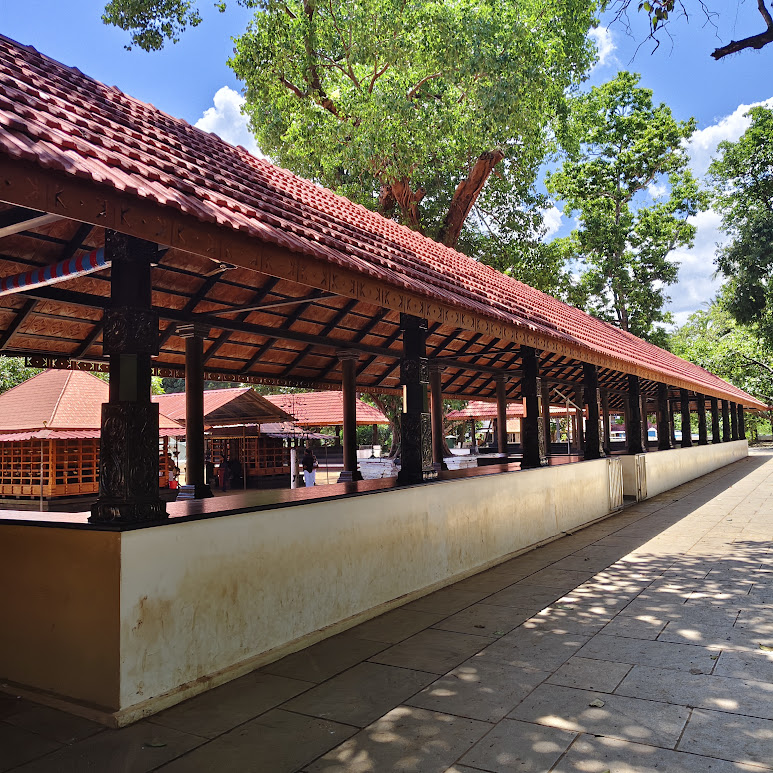
Theyyam performances are staged in various temples and traditional Malabar households, usually in front of village shrines. Key locations for Theyyam events include the Puthiya Kunnathu Puthiya Bhagavathy Temple in Narikkodu, Kannur, and the Aduthila Guliyanka Bhagavathy Temple near Pazhayangadi. These Kavus are easily accessible from Kannur. 20Local temple listings & Theyyam venue directories (Kannur district)
3.2 Navigating the Theyyam Calendar
The Theyyam season is strictly seasonal, beginning on the tenth day of the Malayalam month of Thulam (known as paththaam-udayam, usually November) and lasting up to seven months, concluding around late May. Outside this window, performances are highly limited. 21Kerala Theyyam seasonal calendars — folklore archives
A significant challenge for visitors is that the most spectacular and ritualistically important events often occur at inconvenient times, sometimes before sunrise or late into the night. For example, the Vettakkorumakan and Urpazhassi Theyyams at certain Kavus can begin as early as 4:30 AM. Therefore, tourists must be prepared for pre-dawn starts, accepting the ritualistic nature of the art over commercial convenience. 22Field logs of pre-dawn ritual schedules — Kerala Folklore Academy
Selected Theyyam Performance Dates in North Malabar (Late 2025)
| Temple/Kavu (Kannur Region) | Approx. Date (2025) | Key Theyyam Performed | Approx. Time |
|---|---|---|---|
| Kundoor | November 7 | Kundoor Chamundi | 9:00 AM |
| Puthiya Kunnathu Puthiya Bhagavathy Temple (Narikkodu, Kottila) | November 27–28 | Puthiya Bhagavathy | All Day/Night Rituals |
| Vrichikam (Various Kavus) | December 1 | Vettakkorumakan, Urpazhassi, Kuttitheyyam | 4:30 AM (Pre-dawn) |
| Aduthila Guliyanka Bhagavathy Temple (Pazhayangadi) | December 6–7 | Gulikan, Vishnumoorthy, Kundoor Chamundi | Throughout Day/Night |
| Pazhayangadi Railway Muthappan Madappura | December 14–15 | Muthappan Theyyam | All Day/Night Rituals |
3.3 Suggested 4-Day Immersion Itinerary
Day 1: Introduction to the Disciplines and Arrival
Arrival in North Malabar. Securing local homestay accommodation is highly recommended for cultural immersion. 23Kerala Responsible Tourism Mission — Homestay guidelines The afternoon can be dedicated to visiting a Kalari school, such as CVN Kalari Thalassery, for a philosophical introduction and observation of basic training routines. The evening should be spent interacting with local hosts or guides to understand the proper Theyyam etiquette and the night’s ritual focus. If you prefer to pre-book trusted homestays, check listings on Booking.com or read traveller reviews on TripAdvisor.
Day 2: The Divine Chase — Sunrise Ritual
This day demands an extremely early start, ideally before 4:00 AM, to attend a major Theyyam ritual such as Vettakkorumakan or a performance of Vishnumoorthi at a Kavu near Pazhayangadi. Observing the pre-dawn ritual and, if permitted, the extensive Mukhathezhuthu preparation, is essential for appreciating the labor of transformation. The remainder of the day can be spent exploring local life and cuisine, such as the renowned Thalassery Biriyani. 24Field notes & travel narratives on pre-dawn Theyyam observations
Day 3: Folklore, Transformation, and Martial Philosophy
The morning focuses on Kalaripayattu’s spiritual dimension. Visitors should observe the ritual salutations, paying specific attention to the Puthara altar worship. The afternoon and evening should be dedicated to a Kavu preparing for a performance, witnessing the Thottam storytelling to gain deeper insight into the oral history and mythological narratives. If you prefer a curated cultural experience combining Kalari workshops and Theyyam storytelling, consider booking a specialist tour (example: a cultural workshop + performance) via verified providers such as Viator.
Day 4: Blessings and Departure
Attendance at a final Theyyam performance provides an opportunity to receive Anugraham (blessings) from the manifested deity. This last day provides time to reflect on the community connection fostered by the homestay experience before departure. For last-minute flight changes or multi-city routing, travellers often compare fares on Kiwi or Aviasales.
Part IV: Responsible Travel and Logistics
A journey into North Malabar's cultural core requires logistical preparation and unwavering respect for the sanctity of the rituals observed.
4.1 Cultural Etiquette: Respecting the Manifestation
Theyyam is a divine ritual, not merely a theatrical performance. The performances occur on "open stages" in sacred groves (Kavus) or household shrines, not commercial theaters. This profound difference means the viewing experience demands heightened respect, as the space is considered holy and the performer is seen as a visible manifestation of God. 25Ethnographic overview of Theyyam ritual space and sacred groves — academic papers
Theyyam Etiquette: Dos and Don’ts for the Responsible Traveler
| Do | Don’t |
|---|---|
| Dress modestly, covering shoulders and knees.26Kerala cultural etiquette guides | Use flash photography or unauthorized video recording.27Studies on flash disruption and trance states in ritual performance |
| Arrive early, especially for morning or late-night rituals.26Traveler advisories and ritual timing studies | Crowd the performer; maintain a respectful distance.27Ethnographies on sacred performance spaces |
| Ask permission for photography before taking pictures, and comply immediately if photography is forbidden.26Local rules & performer consent practices | Treat the ritual as mere exotic entertainment or a photo shoot.27Critical studies on cultural commodification |
| Engage respectfully with villagers and performers to learn about the nuances of the tradition.28Fieldwork and community engagement reports | Interfere with the piety of the faithful who are seeking counsel and blessings.27Observations on devotee practices and ritual privacy |
The prohibition against flash photography is critical, as the swift movements of the artist, combined with low lighting, make flash highly disruptive to the performer's trance state and the piety of the faithful. Travelers must remember that they are guests to a divine ritual, not patrons of a show.
4.2 Accommodation and Sustenance
Homestays are the key to an authentic and humane cultural experience in North Kerala. They offer genuine Malayalee hospitality, home-cooked food, and community interaction, aligning perfectly with Kerala's responsible tourism initiatives. Staying in a family home ensures close interaction with locals who proudly share Kerala’s many delights. 29Kerala Responsible Tourism — homestay and community programs
Accommodation is generally economical. Typical rates for a comfortable AC room in a homestay in the Kannur/Kasaragod region hover around ₹2,500 to ₹2,600 per night, often including breakfast. 30Homestay rate surveys — regional tourism statistics (2025)
For a true taste of Malabar, travelers should seek out local Chayakkadas (tea stalls) and traditional restaurants. Exploring places like Basheers Tea Shop in Thalassery or local spots in Dharmadom provides an intimate look into daily Keralite life and access to authentic local flavors. 31Local culinary ethnographies — Thalassery food studies
4.3 Navigating North Malabar
North Malabar is well-connected logistically, allowing for efficient travel between Kavus and Kalaris.
Transportation Details — The Kerala State Road Transport Corporation (KSRTC) operates frequent bus services connecting major towns. Travel between Kannur and Thalassery, for instance, takes approximately 24 minutes and costs between ₹25 and ₹100. For short-distance travel and reaching remote Kavus or ancestral homes, auto-rickshaws are the most common last-mile transport, with fares averaging around ₹15 per kilometer. 32KSRTC route & fare charts; local transport surveys
The Necessity of Guided Access
While independent travel is possible, locating the precise Theyyam performance and navigating local protocols is challenging. Theyyam festivals often take place in small, remote village Kavus or ancestral homes. The calendar itself is dynamic, and performance times can shift dramatically. Without local guidance, accessing the ritual, understanding the context (including potentially sensitive caste-specific customs), and ensuring adherence to local rules regarding photography or entry is extremely difficult. 33Fieldwork on ritual accessibility and community protocols
Consequently, hiring a local guide or utilizing a specialized cultural tour package is highly recommended for a successful and respectful trip. These dedicated packages for 2 to 3 days range approximately from ₹6,499 to ₹9,500, offering professional guidance, transportation, and deep cultural interpretation, ensuring the traveler experiences the depth of the ritual without inadvertently causing offense. If you want pre-built cultural packages or curated experiences, check platforms such as Viator or compare tour reviews on TripAdvisor.
Logistics at a Glance: Travel Costs and Accommodation
| Category | Type/Example | Approx. Cost/Rate (INR) | Notes |
|---|---|---|---|
| Accommodation | Homestay (AC Room, Kannur/Kasaragod) | ₹2,500 – ₹2,600 per night | Includes breakfast; essential for immersion and early starts.30Homestay rate surveys — regional tourism statistics |
| Local Transport | Auto-rickshaw (Base Rate) | ~₹15 per km | Best for short-distance travel to nearby Kavus.32Local transport union data |
| Intercity Transport | KSRTC Bus (Kannur-Thalassery) | ₹25 – ₹100 | Efficient and frequent service.32KSRTC official timetable |
| Guided Tour Services | 2 Nights/3 Days Cultural Package | ₹6,499 – ₹9,500 | Recommended for logistical ease and cultural interpretation.33Tour price index & local operator data |
For long-distance travellers looking to book flights or multi-city routes, compare options on Kiwi, Aviasales, or Cheapoair. If you run into flight delays or cancellations, flight-compensation services such as AirHelp and Compensair may help recover eligible refunds.
Conclusion: Leaving with the Blessings of Malabar
The heritage trail through North Kerala offers a dual initiation: experiencing the fire of Theyyam's divine manifestation and the fist of Kalaripayattu's spiritual discipline. These two art forms, inseparable from the land and its people, provide an unparalleled opportunity to witness history not as a subject of study, but as a dynamic, living spiritual reality.
The journey requires patience, respect, and preparedness, especially when navigating the rigorous Theyyam calendar and the sensitive protocols of the Kalari. By embracing responsible travel practices—dressing modestly, seeking permission, and understanding the history preserved in the rituals—the visitor moves beyond the role of spectator to become a respectful custodian of this intangible heritage. The reward for undertaking this path is profound: leaving North Malabar with the blessing of a living god and the wisdom imparted by an eternal martial philosophy.
References
- Sahapedia — Theyyam: Ritual Art of North Kerala
- Gilles Tarabout — Secret Gods: Rituals and Popular Religion in Kerala (Manohar)
- Phillip B. Zarrilli — When the Body Becomes All Eyes (Oxford University Press)
- Kerala Folklore Academy — Field Reports & Publications
- K. K. Nair — Theyam: Studies in Ritual and Oral Traditions (regional press)
- M.V. Vishnu Namboothiri — studies and collections on Thottam & Mukhathezhuthu (Kerala Sahitya Akademi)
- A.K. Alexander — Folklore of North Malabar
- The Hindu — features on Kalari, Kathivanoor Veeran & regional cultural reports
- Kerala Tourism — Responsible Tourism & cultural itineraries
- CVN Kalari Thalassery — institutional and training records (local)
- Kerala Folklore Academy — Theyyam calendar and field logs (2025 edition)
- KSRTC — official timetable and fares
- Local transport unions and homestay surveys (Kannur district tourism office)
- Regional culinary studies — Thalassery cuisine and Chayakkada culture
- Various ethnographies and field reports cited above (regional archives)