In the broader world of Hindu pilgrimage, it is possible to find temples dedicated to Lord Rama, Lord Vishnu, Lord Shiva, and the great goddesses in nearly every corner of the subcontinent. But there is one thing that exists only in central Kerala: ancient, separate temples dedicated individually to each of the four sons of King Dasharatha — Rama, Bharata, Lakshmana, and Shatrughna — each enshrined with his own presiding identity, his own folklore, his own community of devotees, and his own sacred stories rooted in the specific landscape of the land where he was worshipped.
Nalampaladarshanam (നാലംപാല ദര്ശനം) — “the darshan of the four (nala) temples (ambalam)” — is the pilgrimage that visits all four. Its folklore is as rich as any tradition in Kerala: a founding legend involving a drowning and a dream, sacred river rituals that heal illness, oral traditions about the very act of silence, and a pilgrimage calendar tied not to a temple festival but to the most vulnerable month in the Kerala year. This article explores all of it.
What is Nalampaladarshanam?
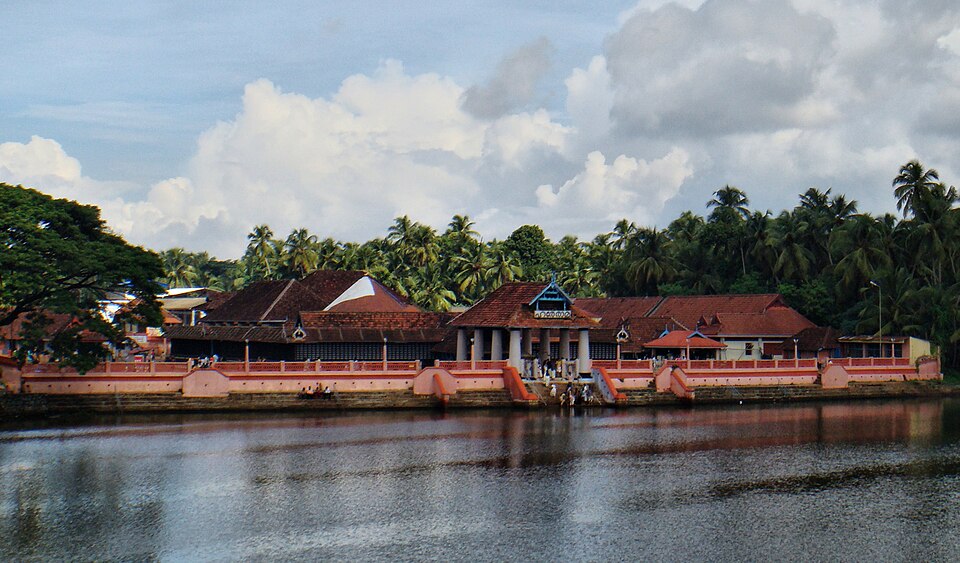
Nalampaladarshanam — also known as Nalambalam Darshan or Nalambalam Yatra — is the practice of visiting all four temples in a prescribed sequence within a single day. The Malayalam word nalam means “four,” and ambalam (or pala in the older term) means “temple.” Together, the compound denotes both the physical circuit and the spiritual act of completing it.
The four temples, in the prescribed pilgrimage sequence, are:
The prescribed sequence — Triprayar → Koodalmanikyam → Thirumoozhikkulam → Payammal — traces a rough arc through central Kerala, covering approximately 60–80 km depending on the route taken. Completing the circuit before noon on the first day of Karkidakam is considered especially auspicious. The physical journey itself — pre-dawn departures, river crossings, roadside stops at holy trees — is as much a part of the folklore as the shrines at either end.
Myths & Oral Traditions — Vakkayil Kaimal and the Dream
Every great pilgrimage has a founding narrative. Nalampaladarshanam’s is extraordinary: a dream, a drowning civilisation, and four identical statues whose identities could only be determined through divine consultation.
The most widely circulated oral tradition tells of Vakkayil Kaimal — a powerful local chieftain and Nair lord of the Kolathunadu region — who received a dream visitation from a mysterious figure directing him to the sea shore. The dream figure told him that four sacred idols had been washed ashore from the ocean, and that they were to be consecrated at four specific locations.
When Kaimal went to the shore the next morning, he found exactly what the dream had promised: four four-armed Vishnu forms, each identical in material and appearance, lying on the sand. This was the first puzzle: if all four idols are visually identical representations of Vishnu, how could anyone determine which was Rama, which Bharata, which Lakshmana, and which Shatrughna?
The tradition’s solution is remarkable. A deva-prashanam — a divine oracle consultation, a specifically Keralite ritual-divinatory practice — was convened. The oracle identified each idol’s sacred identity. The correct sequence of consecration was determined, and each idol was installed at its destined location: Rama at Triprayar, Bharata at Irinjalakuda, Lakshmana at Thirumoozhikkulam, Shatrughna at Payammal.
“When the muhurta for the installation of Sree Rama’s idol was being fixed, an incorporeal voice was heard saying that a peacock would fly high above the sky and that this would be the auspicious sign.”
— From the oral tradition of Triprayar, recorded in temple chronicles and local loreThe Submerged Dvaraka — A Second Layer of Myth
A second, equally compelling origin narrative places the four idols within the larger cosmological story of the end of the Dvapara Yuga. According to this tradition, Lord Krishna himself had worshipped these four idols at his palace in Dvaraka — the great city that, according to the Puranas, was submerged by the sea when the Dvapara Yuga ended and the Kali Yuga began. The four idols, released from the submerged city, were carried by ocean currents until they washed ashore near Triprayar on the Malabar Coast.
This narrative does several things at once. It gives the idols the highest possible pedigree — they were not merely consecrated but actively used for personal devotion by Lord Krishna. It connects the local pilgrimage to a pan-Indian cosmological narrative (the end of Dvaraka). And it provides a geographically specific origin point for the idols’ journey — a detail that anchors cosmic mythology in local coastal geography, making the supernatural feel verifiable and grounded.
The Four Sacred Sites — Their Folklore and Local Lore
Triprayar — The Peacock, the River, and the Healing Fish
Triprayar Sree Ramaswami Temple sits on the banks of the Triprayar River — the Periyar’s tributary that gives the town its name. The temple’s folk traditions are several and distinctive:
- Meenoottu (fish-feeding ritual): Pilgrims feed the sacred fish of the Triprayar River as a devotional practice. The oral tradition insists that regular Meenoottu at Triprayar cures asthma and respiratory ailments. The fish, believed to be sacred presences associated with the deity, are never harmed by temple waters or offerings. This is one of the clearest examples in the Nalambalam circuit of eco-folklore — the sacred merging with the ecological in a practice that preserves the river’s fish population through religious sanction.
- Kadhina Vedi: A ritual fire lit to commemorate Hanuman’s return after finding Sita in Lanka. The performance of this fire ritual at Triprayar — rather than at Hanuman’s own shrines — reflects the folk understanding that Triprayar’s Rama is directly connected to the emotional peak of the Ramayana narrative: the joy of reunion and relief after the longest period of uncertainty.
- The Inverted Ekadasi: Most major Vaishnava temples observe Ekadasi (the 11th lunar day) after the new moon as the primary occasion. Triprayar observes the Karutha Paksha Ekadasi — the 11th day after the full moon, the dark fortnight’s Ekadasi. The oral explanation is notable: the darker half of the lunar month is when Chathan (a powerful protective spirit) and other powerful supernatural entities are present around the deity. The choice of the dark Ekadasi reflects a distinctly Kerala folk understanding of the divine — one that does not exclude the fierce and the liminal but incorporates them as protective forces within the same sacred space.
- Wood carvings and murals: The namaskara mandapam (prayer hall) of Triprayar has 24 panels of elaborate wood carvings and several ancient murals — a preserved archive of folk visual art that encodes Ramayana episodes in the visual grammar of Kerala’s temple craft tradition.

The dress code for all four Nalambalam temples is strict and traditional. Men are required to wear the white Kerala Mundu (dhoti) throughout the pilgrimage; the Koodalmanikyam Bharata Temple specifically requires Mundu without an upper garment. The traditional attire is not merely respectful — it is a living folk practice connecting the pilgrim’s body to the sacred space in the way these temples have always required. Authentic Kerala Mundu and Veshti available on Amazon.
Shop Kerala Mundu →Affiliate link — we earn a small commission at no extra cost to you.
Koodalmanikyam — The Temple of the Devoted Brother
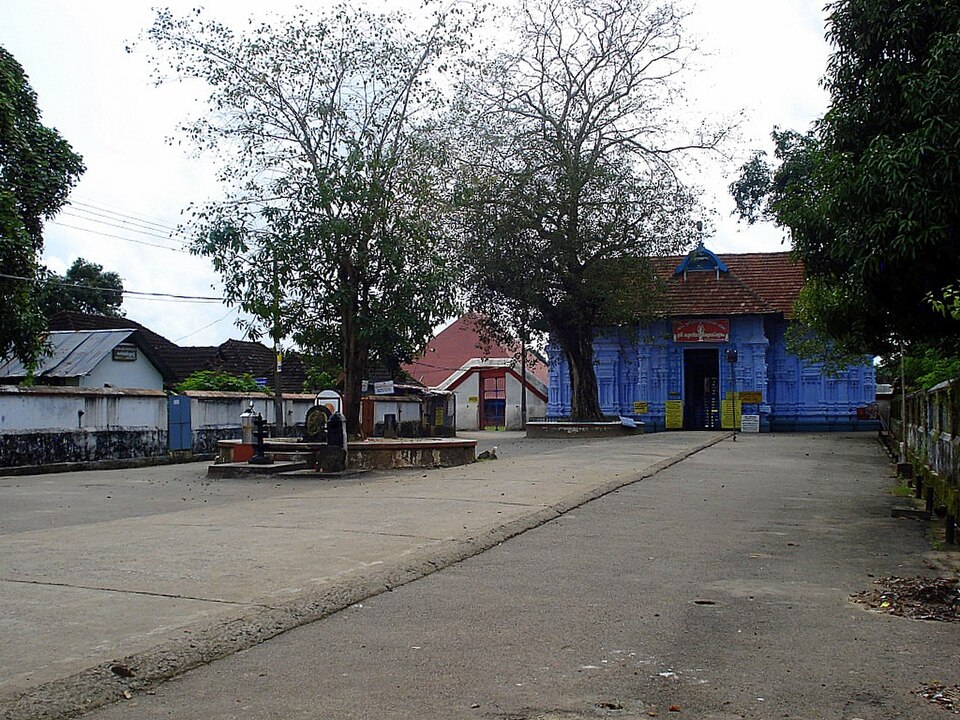
The Koodalmanikyam — “Koodal” (confluence) + “Manikyam” (jewel) — stands at the confluence of two rivers in Irinjalakuda, Thrissur district. Its primary folk distinction is its extraordinary theological rarity: no other major ancient temple in India makes Bharata the principal deity. The reasons for this rarity are embedded in the oral traditions of the pilgrimage itself.
In the popular folk-theological understanding of Bharata’s character, he is the supreme exemplar of devotional renunciation. When Rama went into exile, Bharata — who was being invited to become king — refused the throne absolutely. He placed Rama’s sandals on the throne as symbolic ruler and lived as an ascetic outside Ayodhya’s gates for the full 14 years of Rama’s exile. His devotion was not performed for an audience; it was lived in complete privacy. In folk understanding, this is precisely why Bharata’s own divine temple is appropriate in a way that is not true of the more publicly celebrated figures: Bharata’s worship is for those who understand that the deepest devotion is the one nobody sees.
The dress code tradition at Koodalmanikyam reflects this austerity: men are required to enter wearing Mundu without an upper garment — a dress code that re-enacts, in the pilgrim’s own body, the ascetic simplicity that Bharata himself practised. The pilgrimage requirement is not merely respectful dress; it is a re-enactment of the legend itself.
Thirumoozhikkulam — Where Sacred Words Were Spoken
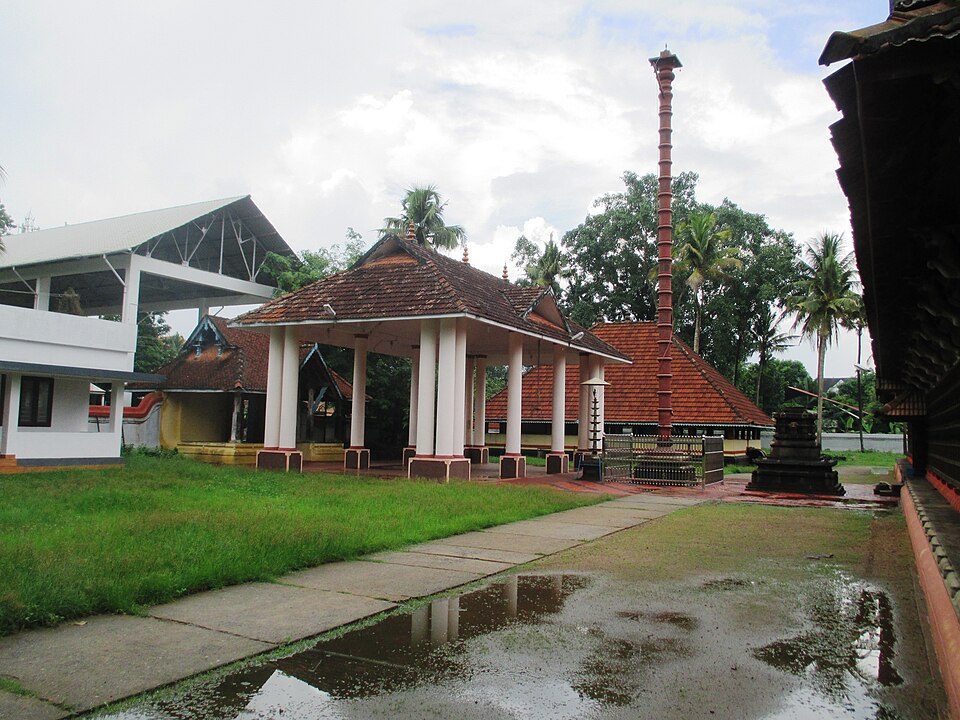
Thirumoozhikkulam is the most theologically layered of the four temples, and also the one whose name is itself the most direct encoding of its founding folklore. Thiru means sacred; Mozhi means words or speech; kalam means place. Thirumoozhikkulam is “the place of sacred speech.”
The oral tradition behind the name involves Sage Hareetha, who undertook intense penance on the banks of the Chalakudy River (Poorna River) at the beginning of the Kali Yuga. Lord Vishnu, pleased by his devotion, appeared before him. Hareetha asked a question of urgent practical significance: how should human beings navigate the difficulties of the Kali Yuga? Vishnu’s answers — his guidance for righteous living in the most difficult of the four cosmic ages — were the Thiru Mozhi: the sacred words. The place where they were spoken became Thirumoozhikkulam.
A second tradition is equally significant. In the Ramayana, when Bharata came to the forest to beg Rama to return and rule, Lakshmana initially suspected betrayal and prepared to fight. When Bharata’s innocence and supreme devotion was revealed, the two brothers are said to have worshipped together at this very location. The folk tradition holds that Lakshmana himself worshipped here and the deity took Lakshmana’s form in response — a divine mirroring that makes Thirumoozhikkulam the place where reconciliation between brothers became sacred.
One of the most distinctive folk practices at Thirumoozhikkulam — noted by local tradition and unusual among Kerala’s temples — is that no musical instruments are played during puja. The worship is conducted in silence, appropriate to a place whose identity is built not around sound but around the quality of the words spoken here: considered, quiet, and sacred.
Payammal — The Quiet Temple of the Youngest Brother
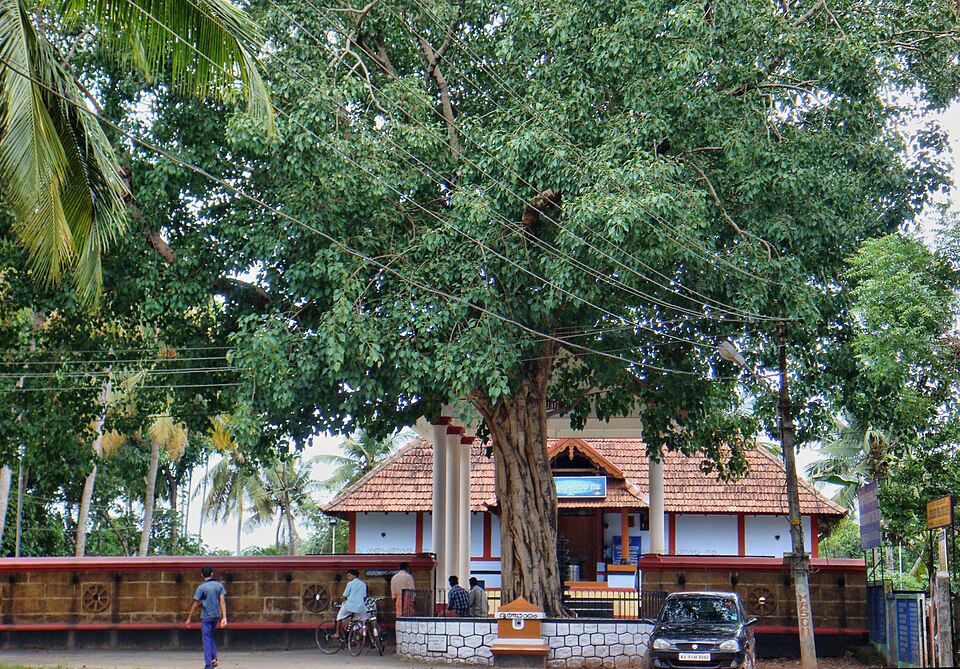
Payammal is the fourth temple of the circuit, and folklorically it is the most interesting precisely because it is the most overlooked. Shatrughna — the youngest of Dasharatha’s four sons — appears far less frequently in the Ramayana’s major narrative arcs than his brothers. He does not go into forest exile, does not fight at Lanka, does not inspire great devotional poetry in the same measure. He is, in the tradition’s own terms, the quiet one.
The folk understanding of Nalampaladarshanam takes this quietness seriously. The purpose of the pilgrimage is not to visit the four most celebrated temples or the four most famous figures. It is to achieve the complete darshan of the complete family — and that completeness is only possible when Shatrughna, the youngest and least sung, is also included. Without Payammal, the circuit remains incomplete. The theological implication, carried in the oral tradition, is simple: no community is complete when its quietest members are left out.
In practical folklore, Payammal is also associated with the completion of sankalpa (sacred vow). Pilgrims who have undertaken the Nalampaladarshanam with a specific intention in mind — healing, thanksgiving, petition — consider the vow formally fulfilled only at Payammal, with the final darshan. The closing of the circuit carries its own ritual weight.
Rituals & Community Lore — Karkidakam, the Month of the Ramayana
Nalampaladarshanam is performed throughout the year, but its most auspicious moment is concentrated in Karkidakam — the final month of the traditional Malayalam calendar, running from approximately mid-July to mid-August. Karkidakam is simultaneously the Ramayana Masam (the month dedicated to reading and reciting the Ramayana) and the most physically challenging month of the Kerala year.
The folk understanding of Karkidakam’s character is layered and precise. It is the monsoon’s fullest expression: rivers flood, roads become impassable, agricultural work is impossible. In the old economy, it was the month of genuine scarcity — the granaries from the previous harvest were depleted, and the new harvest was months away. Illness associated with the monsoon environment — respiratory, digestive, mosquito-borne — peaks in this month.
This vulnerability is not incidental to Karkidakam’s spiritual significance — it is its entire point. Folk belief holds that the spiritual protection needed is highest precisely when physical protection is lowest. Completing the Nalampaladarshanam — particularly on the very first day of Karkidakam — is believed to:
- Purify accumulated sins of the previous year
- Protect the household through the physically dangerous monsoon period
- Ensure prosperity through the coming agricultural season
- Fulfil specific vows made in gratitude for past divine favours
- Seek blessings for family members who could not undertake the pilgrimage themselves
Ramayana Masam — The Community Recitation Tradition
The most distinctive community ritual of Karkidakam — directly connected to the Nalampaladarshanam’s spiritual context — is the daily recitation of the Adhyatma Ramayana throughout the month, in every Hindu household. This is not a temple-specific practice: it is a community-wide, household-based oral tradition in which the Ramayana is read aloud from the first day to the last of Karkidakam, completing the full text in the course of the month.
The Adhyatma Ramayana used in Kerala’s household tradition is a Malayalam rendering, and its recitation is itself a folk art — performed in a specific melodic mode called Ramayana Pattam, in a particular voice quality that generations of Kerala families recognise as the sound of Karkidakam evenings. The oral tradition holds that the sound of the Ramayana being read in a house protects it from illness and ill-luck throughout the monsoon. Houses where no Ramayana is read are considered vulnerable in ways that cannot be corrected by any other means.
Eco-Folklore — Sacred Rivers and the Living Landscape
Nalampaladarshanam’s deepest folk dimensions are geographical. The four temples are distributed across the river systems of central Kerala, and the oral traditions associated with each temple are inseparable from the rivers that run beside them.
The Triprayar River — Sacred Fish and Healing Waters
The Triprayar River — a tributary of the Bharatapuzha — is the defining natural feature of the first Nalambalam temple. The river’s fish are protected by ritual sanction: they are fed (Meenoottu) by devotees, they are never harmed on temple grounds, and they are understood as sacred presences associated with the deity. The folk belief that feeding these fish cures asthma is the clearest example of how eco-folklore and pilgrimage practice merge in the Nalambalam tradition: the river’s ecology is maintained through religious obligation.
The Chalakudy River — Where Wisdom Was Given
The Chalakudy River (Poorna River) runs beside Thirumoozhikkulam, and the temple’s founding legend is entirely a river story. It was on the banks of the Chalakudy that Sage Hareetha performed his penance, and the sacred words (Thiru Mozhi) that gave the place its name were spoken at the river’s edge, in the sound-world of flowing water. The river is understood in local oral tradition as a co-creator of the temple’s sanctity — not merely a geographical feature but a participant in the sacred event that established the shrine.
In folk ecology, this translates into specific taboos and practices around the Chalakudy River near the temple. The river is treated with the kind of reverence ordinarily accorded to a divine presence — a practice that effectively functions as environmental protection, preventing the kind of exploitation that secular relationships with water bodies might allow.
Sacred Trees and Pilgrimage Markers
Along the traditional Nalampaladarshanam route, oral tradition identifies specific trees as rest points, blessing sites, and boundary markers of the sacred geography. The Pala tree (Alstonia scholaris) near several temples is associated with the presence of protective spirits, and the oral tradition contains warnings about the consequences of harming these trees. Sacred Fig trees (Arayal) at crossroads along the pilgrimage route are understood as waypoints where the pilgrim’s intention is renewed — small folk rituals of circumambulation and leaf offerings mark these stops without any official sanction or scriptural authority. They are pure community-generated practice, precisely what defines folk tradition.
Local Topography and the Pilgrimage Landscape
The physical geography of the Nalampaladarshanam circuit is itself a kind of folk geography — a landscape read through layers of mythological meaning that transform the ordinary Central Kerala countryside into a sacred map.
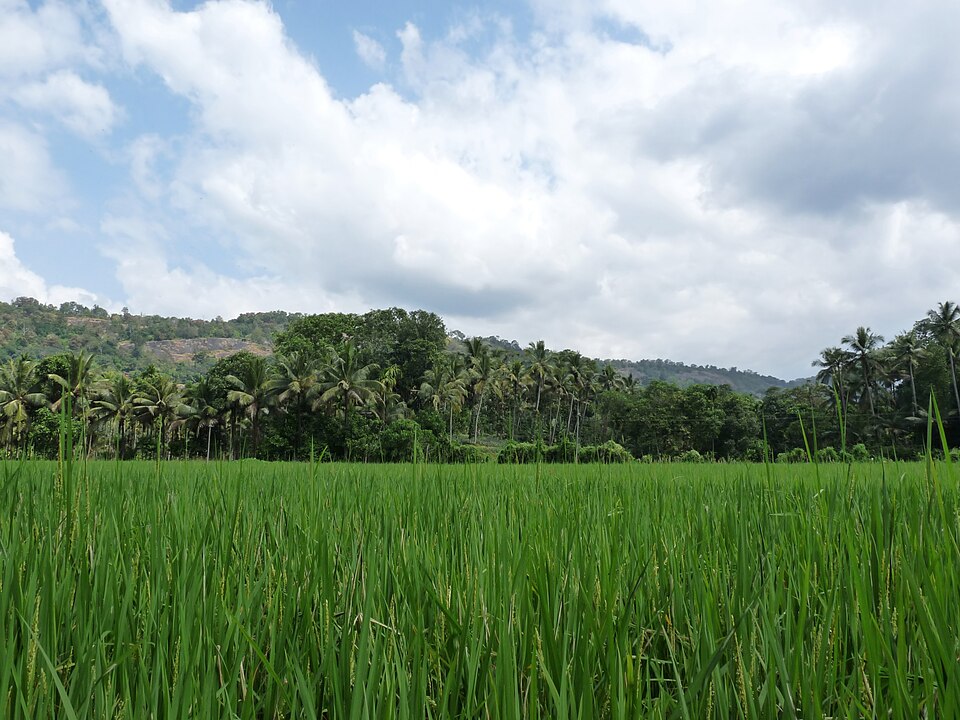
The circuit moves through three distinct ecological zones in the course of a single day’s journey. The first — Triprayar — is a river-town environment, the temple directly accessible from the water. The second — Irinjalakuda — is the urban market town at the confluence of rivers, the Koodalmanikyam standing at the crossing point. The third — Thirumoozhikkulam — moves into a quieter, more rural environment closer to the foothills. The fourth — Payammal — is set in the agrarian periphery: small-scale paddy fields, narrow roads, the least urbanised of the four sites.
This progression from river-bank market town to quiet agrarian shrine is not merely geographical — in the folk understanding it mirrors the Ramayana’s own movement from the grandeur of Ayodhya to the quietude of the forest. The pilgrimage physically re-enacts the narrative arc: beginning in the most celebrated space and ending in the most humble, reflecting the lesson that the complete experience of the divine requires willingness to go to the margins.
Folk Art & Literature — How Nalampaladarshanam Lives in Culture
Adhyatma Ramayana — The Textual Foundation of the Living Tradition
The literary foundation of Nalampaladarshanam’s entire cultural world is the Adhyatma Ramayana — a Sanskrit text of the late medieval period that grounds the Ramayana narrative in Advaita Vedanta philosophy, understanding Rama not merely as a heroic king but as the direct manifestation of Brahman, the ultimate reality. This text was translated into Malayalam and became the standard version recited in Kerala’s homes during Karkidakam.
The folk practice of Ramayana recitation is itself a form of oral literature with specific performance conventions: particular sitting positions, specific times of day (typically evening), a formal opening invocation, and a melodic pattern for delivery that distinguishes the reciter from ordinary speech. These conventions are transmitted within families and communities, not through formal instruction — they are, precisely, folk art.
Koodiyattam at Thirumoozhikkulam — The Living Sanskrit Theatre
Among the four temples, Thirumoozhikkulam holds a particularly rare folk-artistic distinction: it is one of the few Kerala temples where Koodiyattam — the ancient Sanskrit theatre tradition, listed by UNESCO as an Intangible Cultural Heritage — continues to be performed as part of the temple’s living ritual culture. Koodiyattam performances at Thirumoozhikkulam are not staged for tourists but offered as a form of worship — a temple art in the fullest sense, connecting the living performance tradition directly to the deity’s sacred space.
The tradition’s connection to the Lakshmana-Bharata reconciliation story is direct: Koodiyattam’s most celebrated episodes include dramatic scenes from the Ramayana where brothers misunderstand and then recognise each other — the same emotional terrain that gives Thirumoozhikkulam its folk identity as the “place where sacred words were spoken” and where fraternal devotion was confirmed.
Ramayana in Kathakali and Temple Arts
The pilgrimage season of Karkidakam coincides with intensive Ramayana performance in Kerala’s ritual art traditions. Kathakali companies traditionally perform Ramayana episodes during this month, particularly the Yuddha Kanda (battle chapters) and the Kishkindha Kanda. These performances function as a community-wide immersion in the Ramayana narrative — surrounding the pilgrims’ physical journey with a cultural environment saturated with the same stories.
Smaller folk traditions — including Ramanapattu (songs of Rama) sung at thresholds, Ramanakrishi (harvest songs incorporating Rama themes), and informal storytelling sessions that gather around the Ramayana recitation — create an ambient folk-cultural context in which Nalampaladarshanam is not experienced in isolation but as part of a month-long cultural immersion that involves the entire community.
Social Folklore — Community Practices and Living Lore
The Dress Code as Living Folklore
The dress requirements of the four Nalambalam temples are among the most explicit living examples of social folklore in the pilgrimage tradition. Dress codes in temple contexts are rarely merely aesthetic — they encode theology, community memory, and folk social norms. At the Nalambalam temples:
- Men: Traditional white Kerala Mundu (dhoti) throughout. At Koodalmanikyam, Mundu without upper garment specifically, re-enacting Bharata’s ascetic vow
- Women: Traditional Kerala attire — Kerala Kasavu saree or equivalent modest traditional dress
- Children: Traditional attire wherever possible; the act of dressing children in traditional Kerala clothes for the pilgrimage is itself understood as a transmission — the passing of the cultural practice to the next generation
These requirements are maintained entirely through community consensus and oral tradition, not through any formal state enforcement. Families who have done the pilgrimage for generations transmit the dress requirements alongside the route, the sequence, and the stories — the clothing is part of the knowledge.

For women undertaking Nalampaladarshanam, the traditional Kerala Kasavu saree — white cotton with the distinctive gold zari border — is the appropriate attire for all four temples. The Kasavu’s simplicity and elegance reflects the same spirit as the pilgrimage itself: pure, complete, and rooted in the deepest Kerala cultural tradition. Authentic Kerala Kasavu sarees available on Amazon.
Shop Kerala Kasavu Saree →Affiliate link — we earn a small commission at no extra cost to you.
Family Vows and Intergenerational Transmission
Among the most significant social functions of Nalampaladarshanam is its role in intergenerational vow-making and vow-fulfilling. A typical pattern in Central Kerala families involves parents undertaking the pilgrimage in fulfilment of a vow made at the time of a child’s illness or difficulty, and returning with the child as the intended recipient of the divine blessing. Over time, the child grows up understanding the pilgrimage as the family’s response to a moment of crisis — and frequently undertakes it themselves when their own children face difficulty.
This creates pilgrimage lineages — families with three, four, or five generations of Nalampaladarshanam practice, each generation’s experience informed by the stories of the previous ones. The oral transmission within these families is the primary mechanism by which the pilgrimage’s folklore is preserved: the route, the sequence, the specific folk practices at each temple, and the family’s specific ancestral connection to the tradition.
The Group Pilgrimage Tradition
In earlier decades, Nalampaladarshanam was undertaken as a community group pilgrimage organised by temple trusts, neighbourhood associations (tharavad), or informal groups of neighbours and relatives. The entire group would travel together, often beginning before dawn, stopping at specific waypoints for shared meals, and completing the circuit as a social event as much as a religious one.
This group tradition is both a social bonding mechanism and a knowledge-transmission system: within the group, experienced elder pilgrims pass on the specific lore of each temple — which tree to circumambulate, which river offering to make, why Meenoottu heals, why silence is maintained at Thirumoozhikkulam — to first-time pilgrims. The pilgrimage is a moving classroom of folk knowledge.