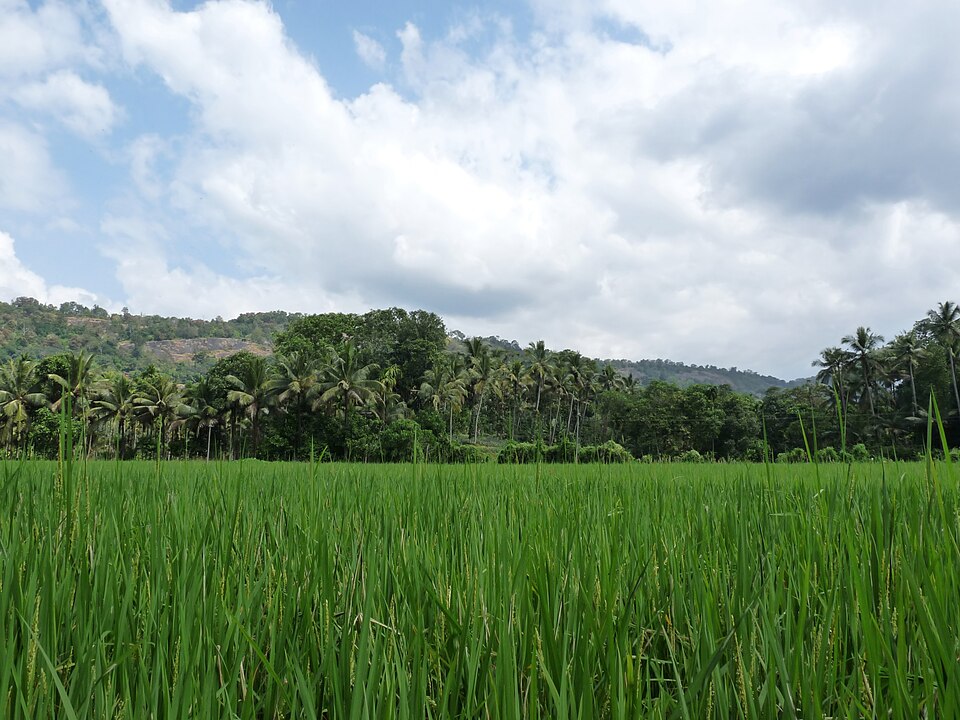
Somewhere in a paddy field in central Kerala, an elderly farmer looks at the sky and says: "The Thiruvathira rain will be here in four days." He is not consulting a weather application. He is consulting a calendar his ancestors developed over several millennia — a system so precisely calibrated to Kerala's specific monsoon behaviour that its predictions, encoded in proverbs, still track reality with accuracy that surprises modern meteorologists. That calendar is Njattuvela — and this is the story of how the stars became a farming guide.
What Is Njattuvela — The Sun's Periods, Named for the Stars

The word Njattuvela derives from Njazhar vela — or in some dialects, Njayar vela — where Njayar (ഞായർ) is the Malayalam word for the Sun, and vela means a period, a span of time, an hour. Together: the Sun's period. The time belonging to the Sun. The name is precise about what the system actually measures: not the Moon's phases, not the seasons in any general sense, but the Sun's movement through the year — specifically, the Sun's apparent position against each of the 27 nakshatra star constellations of Vedic astronomy.
The mathematics of the system is elegant. The solar year has 365 days. Vedic astronomy identifies 27 nakshatras — the 27 segments of the ecliptic (the Sun's apparent path through the sky) named after the most prominent star constellation in each segment. Divide 365 by 27 and you get approximately 13.5. Each Njattuvela period lasts 13.5 days — the time the Sun spends in apparent proximity to each named nakshatra. There are therefore 27 Njattuvela periods in a year, cycling continuously, each named for its nakshatra: Aswathi, Bharani, Karthika, Rohini, Makayiram, Thiruvathira, Punartham — and so on through all 27.
Only one period is slightly different: Thiruvathira Njattuvela, the sixth period, lasts approximately 15 days rather than 13.5 — which is itself one of the many reasons Thiruvathira is considered exceptional and is discussed at length below.
Njattuvela should not be confused with the monthly Malayalam calendar (Kollavarsham). The Malayalam calendar divides the year into 12 months aligned with the Sun's passage through the 12 zodiac signs. Njattuvela divides the same year into 27 periods aligned with the 27 nakshatras. The two systems are complementary and both operate within the broader framework of Kerala's traditional timekeeping. Njattuvela's granularity — 27 periods versus 12 months — gives it considerably more precision for agricultural planning. See our page on Krishi Gita for the related agricultural text tradition.
The Astronomical Foundation — How Stars Became a Farming Calendar
Njattuvela's astronomical basis is the nakshatra system of Vedic astronomy — one of the oldest continuous astronomical traditions in the world, with documented origins reaching back to at least 1500 BCE in the Rigveda and further in oral tradition. The nakshatras are 27 equal divisions of the ecliptic — the path the Sun appears to trace across the sky as seen from Earth — each of approximately 13.33 degrees of arc. Each division is named after the most prominent star or asterism within it.
The connection between these astronomical divisions and agricultural practice was not theoretical. It emerged from something far more practical: observation. Kerala's farming communities noticed, over generations and centuries, that specific periods of the year — defined by the Sun's position against specific star backgrounds — reliably correlated with specific weather patterns. The rain during what we now call Thiruvathira Njattuvela behaved differently from the rain during Punartham or Makayiram. It had a different character, a different rhythm, a different combination of rainfall and sunshine. And those different characters had different implications for what could be planted, what would thrive, and what would fail.
What the Njattuvela system represents is the formalisation of this multi-generational observational data into a transmissible framework. The observation happens once. The proverb carries it forever. A grandmother in Thrissur who has never studied meteorology knows that when Thiruvathira comes, she should not expect continuous rain — it will be intermittent, punctuated by fierce sunlight. She knows this not from her own lifetime of observation but from the accumulated wisdom of a hundred generations of grandmothers before her, encoded in a proverb her mother told her. That is indigenous science.
Thiruvathira Njattuvela — The King of All Periods
Among Kerala's farmers, Thiruvathira Njattuvela holds a place so singular that it is simply called Njattuvela Rajavu — the King of Njattuvelas. Ask any farmer in Kerala which is the most important period of the agricultural year, and the answer will be immediate: Thiruvathira.
Thiruvathira corresponds to the nakshatra Ardra in Sanskrit — the star Betelgeuse, the brilliant red supergiant at the shoulder of the Orion constellation. In Kerala's agricultural calendar, Thiruvathira Njattuvela falls approximately between June 21 and July 4–5, placing it in the heart of the Southwest Monsoon season.
The Rain Character of Thiruvathira
What distinguishes Thiruvathira Njattuvela from every other period is its extraordinary meteorological character. Unlike the uniform heavy rains of some monsoon periods or the dry spells of others, Thiruvathira offers a specific combination that farmers have valued for millennia: intermittent, intense rain punctuated by periods of fierce sunlight. This is not continuous downpour. It is rain and sun in alternating bursts — and this specific combination creates the ideal conditions for one of Kerala's most important crops: black pepper.
The mythology surrounding Thiruvathira Njattuvela connects directly to this weather character. The nakshatra Ardra/Thiruvathira is associated with Rudra — the fierce, howling, storming manifestation of Lord Shiva. Rudra is the lord of tempests, of intense emotion, of the rain that falls like grief and the sun that burns like anger. In the mythology, Rudra's tears fall as rain and his fierce heat scorches. The earth receives this fierce alternating energy and transforms it — and the crop it produces looks exactly like little black tear drops. Black pepper. Rudra's tears, made into spice.
"They can take the pepper saplings. But they cannot take our Thiruvathira Njattuvela."
— The Zamorin of Kozhikode, to his minister Mangattachan, when the Portuguese demanded pepper-planting knowledge in the 16th centuryThis story from the Zamorin's court encapsulates the Njattuvela system's deepest truth. What the Europeans wanted was the pepper plant. What they could not understand — and therefore could not take — was the calendar that told Kerala's farmers when to plant it. The Zamorin's response was not defiant boasting. It was an accurate meteorological observation: black pepper planted at the right Njattuvela period, in the right monsoon rhythm, in Kerala's specific soil and climate, produces pepper of a quality and quantity that cannot be replicated by simply transplanting the vine anywhere else in the world. The vine they could take. The Thiruvathira Njattuvela stayed in Kerala.
Thiruvathira Rain in Ayurvedic Medicine
The significance of Thiruvathira Njattuvela extends beyond agriculture into Kerala's traditional medicine system. Ayurvedic practitioners — Vaidyars — have traditionally collected rainwater that falls specifically during Thiruvathira Njattuvela for use in preparing medicinal concoctions. This rainwater is believed to have special properties not present in rainwater from other periods — a belief that may reflect empirical observations about the specific chemistry of rainfall at this stage of the monsoon cycle, when the atmosphere, soil, and air have specific qualities.
This intersection of agricultural and medical knowledge within the same calendar system is characteristic of Kerala's integrated approach to traditional knowledge. Njattuvela is not just a farming tool — it is a comprehensive temporal framework that organises planting, harvesting, medicine-making, fishing practices, and ritual events within a single coherent ecological calendar.
All 27 Njattuvela Periods — The Complete Calendar
The following table presents all 27 Njattuvela periods with their Malayalam names, Sanskrit/astronomical nakshatra equivalents, approximate Gregorian date ranges, weather character, and the primary agricultural activities traditionally associated with each period. The Aswathi-to-Swati sequence — the first 15 periods — is the critical paddy cultivation window covering approximately 7.5 months.
| # | Malayalam Name | Sanskrit / Star | Approx. Dates | Weather Character | Agricultural Significance |
|---|---|---|---|---|---|
| 1 | Aswathi | Ashwini / β & γ Arietis | Apr 14–27 | First pre-monsoon showers; dry and hot with occasional early rains | Paddy seed sowing begins — "seed sown during Aswathi will not fail"; ideal for pre-monsoon planting |
| 2 | Bharani | Bharani / 35 Arietis | Apr 27–May 10 | Hot and dry; summer heat peak before rains | Traditional mango pickling — "mango brined during Bharani or in a Bharani clay jar will not rot" |
| 3 | Karthika | Krittika / Pleiades | May 10–24 | Onset of pre-monsoon thunderstorms; irregular rains with heat | Transplanting of certain crops; preparation of nursery beds for paddy |
| 4 | Rohini | Rohini / Aldebaran | May 24–Jun 7 | Pre-monsoon heavy showers; cooling; Vishu season transition | Planting of tubers, yams, and root vegetables; ideal for transplanting with pre-monsoon moisture |
| 5 | Makayiram | Mrigashirsha / λ Orionis | Jun 7–21 | Early Southwest Monsoon; building rainfall intensity | Pre-Thiruvathira preparation; paddy nurseries established; soil preparation for main planting season |
| 6 | Thiruvathira King | Ardra / Betelgeuse (Orion) | Jun 21–Jul 5 (~15 days) | Intense intermittent rain with harsh sunlight; unique alternating pattern; longer than other periods | Black pepper planting — the most important spice cultivation period; Ayurvedic rain-water collection; Karkidakam preparation |
| 7 | Punartham | Punarvasu / Pollux (Gemini) | Jul 5–19 | Continuous moderate monsoon rains; good soaking rainfall | Paddy transplanting; rice seedlings from Aswathi nurseries moved to main fields during this wet period |
| 8 | Pooyam | Pushya / δ Cancri | Jul 19–Aug 2 | Steady monsoon; sustained rainfall without extreme bursts | Main paddy cultivation in full swing; ginger, turmeric, and spice crop management |
| 9 | Ayilyam | Ashlesha / δ Hydrae | Aug 2–16 | Heavy sustained rains; flood-risk period; river levels high | Flood management; Kuttanad farming in paddy fields below sea level; drainage and water management critical |
| 10 | Makam | Magha / Regulus (Leo) | Aug 16–30 | Late monsoon; rainfall beginning to moderate; Onam season approaches | Paddy in late growth stages; spice harvest preparation; Onam celebrations context |
| 11 | Pooram | Purva Phalguni / δ Leonis | Aug 30–Sep 13 | Monsoon retreat beginning; more sunshine; transition period | Early paddy harvest in some regions; coconut processing begins in post-rain period |
| 12 | Uthram | Uttara Phalguni / β Leonis | Sep 13–27 | Post-monsoon transition; good drying weather; Northeast Monsoon approaches | Main rice harvest in many regions; paddy drying and threshing; Onam harvest thanksgiving context |
| 13 | Atham | Hasta / δ Corvi | Sep 27–Oct 11 | Generally dry and clear; post-monsoon sunshine period | Second paddy crop preparation begins (Mundakan); vegetable planting for winter season |
| 14 | Chithra | Chitra / Spica (Virgo) | Oct 11–25 | Dry with some Northeast Monsoon showers; variable | Mundakan paddy sowing; ginger and turmeric harvest; preparation of preserved foods for winter |
| 15 | Chothi | Swati / Arcturus (Boötes) | Oct 25–Nov 8 | Northeast Monsoon onset; moderate rain from the east | End of primary paddy cultivation window (Aswathi to Swati = 7.5 months); second crop management; cashew planting |
| 16 | Vishakham | Vishakha / α Librae | Nov 8–22 | Northeast Monsoon in progress; rain from eastern Arabian Sea | Banana cultivation; arecanut harvesting begins; rubber tapping resumes after monsoon break |
| 17 | Anizham | Anuradha / δ Scorpii | Nov 22–Dec 6 | Variable; Northeast Monsoon tapering; occasional rains | Vegetable gardening; cardamom processing; spice market preparation for festival season |
| 18 | Thrikketta | Jyeshtha / Antares (Scorpius) | Dec 6–20 | Largely dry; cool evenings; winter conditions beginning | Mundakan paddy harvest in low-lying fields; sugarcane cutting; winter vegetable harvest |
| 19 | Moolam | Mula / λ Scorpii | Dec 20–Jan 3 | Dry; cool and clear; post-monsoon calm | Coconut harvesting; jackfruit tree management; pepper harvest and drying begins in some high ranges |
| 20 | Pooradam | Purvashadha / δ Sagittarii | Jan 3–17 | Cool and dry; lowest rainfall of the year | Pepper harvest in main cultivation zones; cashew flowering; inter-crop cultivation |
| 21 | Uthradam | Uttarashadha / σ Sagittarii | Jan 17–31 | Dry; warming gradually; pre-summer season | Banana harvest season; areca nut harvest and processing; soil preparation for summer crops |
| 22 | Thiruvonam | Shravana / Altair (Aquila) | Jan 31–Feb 14 | Dry; warming; occasional western cloud formation | Summer vegetable planting; mango tree management; Thiruvonam in the context of the winter harvest |
| 23 | Avittom | Dhanishtha / β Delphini | Feb 14–28 | Warming and dry; pre-summer heat building | Summer paddy preparation in irrigated areas; coconut oil processing; medicinal plant harvesting |
| 24 | Chathayam | Shatabhisha / λ Aquarii | Feb 28–Mar 14 | Dry and hot; summer heat established | Paddy field preparation for Puncha crop (summer irrigation); water conservation and management begins |
| 25 | Pooruttathi | Purva Bhadrapada / α Pegasi | Mar 14–28 | Hot and dry; pre-monsoon thunderstorms developing | Tapioca and cassava planting; pre-monsoon crop planning; last summer harvests |
| 26 | Uthrattathi | Uttara Bhadrapada / γ Pegasi | Mar 28–Apr 11 | Hot; pre-monsoon thundershowers; increasing humidity | Final summer crop management; preparation for new agricultural year; Vishu calendar transition |
| 27 | Revathi | Revati / ζ Piscium | Apr 11–14 (→ Aswathi) | Pre-monsoon; Vishu season; transitional | Agricultural year closes and renews at Vishu (April 14); the cycle begins again with Aswathi |
Whether you are following the Njattuvela calendar or starting a kitchen garden, the right tools make all the difference. Quality agriculture toolkits for home gardeners and small-scale farmers — sowing, weeding, pruning, and cultivation tools available on Amazon.
Browse Toolkits →Affiliate link — we earn a small commission at no extra cost to you.
The Six Rain Characters of the Monsoon Njattuvelas
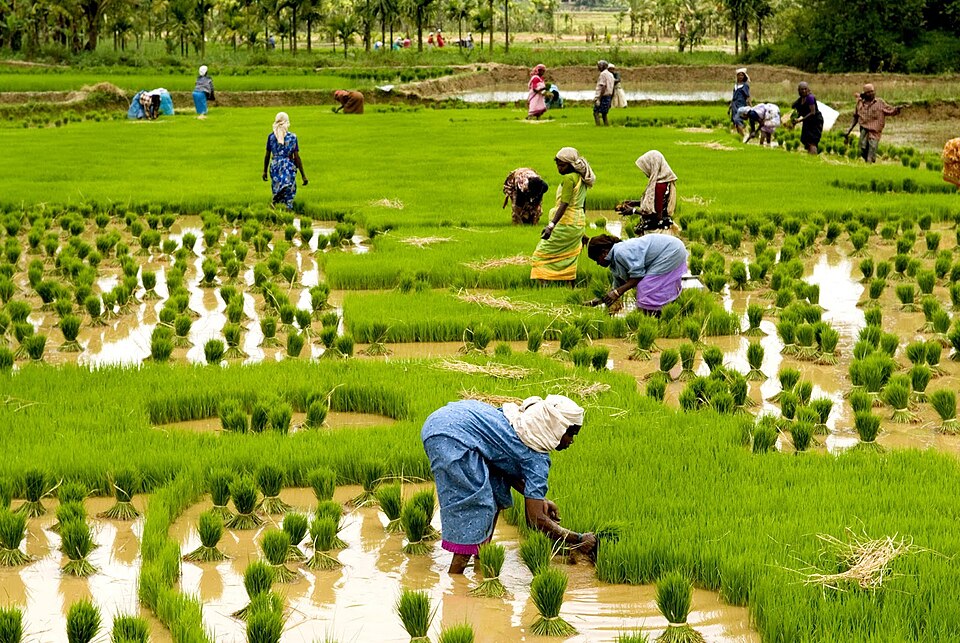
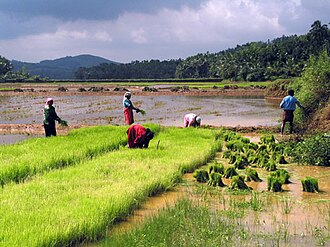
Njattuvela's agricultural precision derives from its differentiation of rain types — the recognition that not all monsoon rain is equivalent. Kerala's farmers identified six broadly different rain characters across the monsoon Njattuvela periods, each with different implications for farming:
Alternating bursts of fierce rain and harsh sunshine. Ideal for black pepper planting and for any crop requiring both intense moisture and strong photosynthesis. The most agriculturally productive rain type but also the most demanding on plants.
Sustained, steady rainfall without extreme intensity. Ideal for transplanting rice seedlings from nurseries into main fields — the consistent moisture prevents transplant shock and establishes root systems securely.
Intense continuous rainfall that raises river levels and creates flood conditions. In low-lying regions like Kuttanad, this is the critical management period: water must be controlled rather than welcomed. The paddy varieties grown here are specifically adapted to survive temporary submersion.
Decreasing rainfall with increasing sunshine. The ideal combination for paddy maturation and grain-filling — the crop needs dry conditions to ripen properly. Farmers watch for this transition carefully as the signal to prepare for harvest.
Sharp, intense, localised thunderstorms before the monsoon's systematic onset. Unpredictable in timing and location but valuable for moistening soil and reducing the fire risk of the dry summer period. Signal to begin nursery preparation.
Rain arriving from the northeast as the Southwest Monsoon retreats. Cooler, lighter, and more irregular than Southwest Monsoon rainfall. Important for second-crop cultivation and for post-harvest soil restoration in central and north Kerala.
The 15-Period Paddy Cultivation Window — Aswathi to Swati
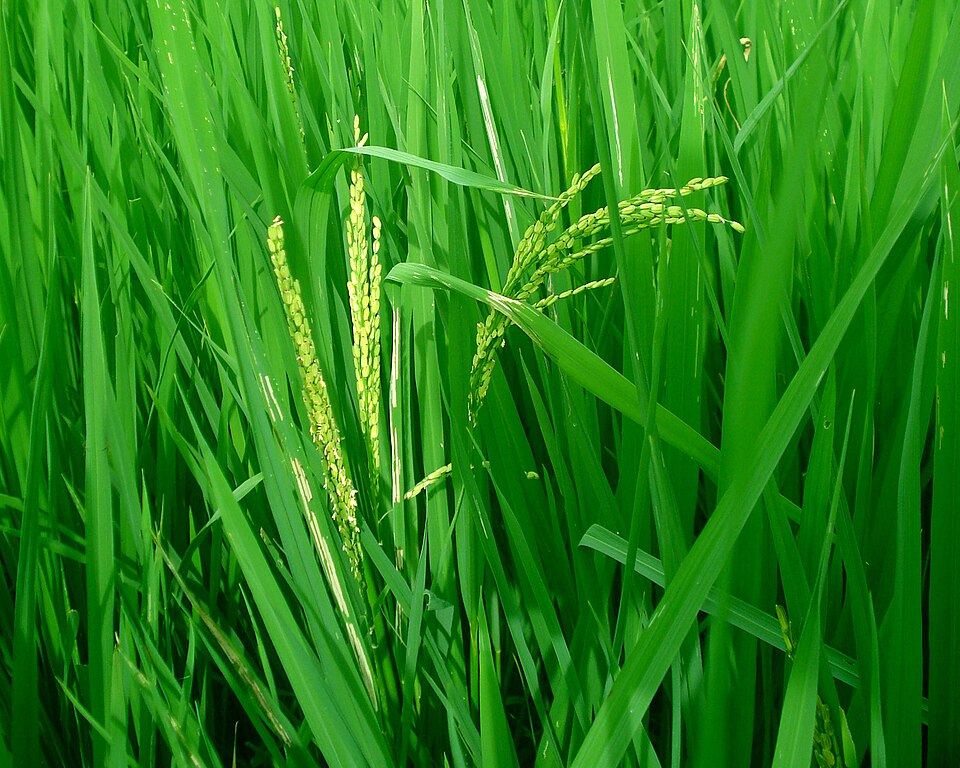
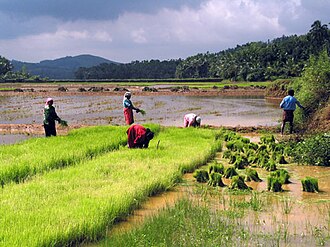
For paddy — Kerala's primary food crop for most of its agricultural history — the Njattuvela calendar defines a specific cultivation window: from Aswathi (period 1, mid-April) to Swati/Chothi (period 15, late October–November). This is approximately 7.5 months of the calendar year, covering the full arc of the Southwest Monsoon from its onset to its retreat. The specific activities within this window are sequenced with precision:
- Aswathi (Period 1): Seeds sown in nurseries. The traditional proverb says seeds sown during Aswathi will not fail — a reflection of generations of observation that the combination of pre-monsoon moisture and rising temperatures during this period produces strong germination rates.
- Rohini to Makayiram (Periods 4–5): Nursery seedlings growing. Fields ploughed and flooded in preparation for transplanting. The pre-monsoon showers provide soil moisture without the overwhelming rainfall that would prevent field preparation.
- Thiruvathira (Period 6): The king period. Black pepper planting as the primary activity. Paddy nurseries being monitored for optimal transplanting size. Ayurvedic rain-water collection.
- Punartham to Pooyam (Periods 7–8): Main paddy transplanting. Seedlings moved from nurseries to flooded main fields during the continuous moderate rains — the steady moisture is essential for the critical transplanting phase.
- Ayilyam (Period 9): Flood management in low-lying areas. Paddy growing in main fields but water management critical in regions like Kuttanad where fields sit below sea level.
- Makam to Pooram (Periods 10–11): Late monsoon paddy growth. The crop approaching maturity. Onam festival coincides with the paddy being golden in the fields — the harvest thanksgiving and the crop's visual peak are not coincidental. They are calibrated.
- Uthram to Atham (Periods 12–13): Main paddy harvest as the monsoon retreats and sunshine returns. The timing is critical: harvest too early and the grain is under-ripe; harvest too late and the retreating rains damage the dried stalks. Njattuvela tells the farmer exactly when the window opens.
- Chothi (Period 15): End of the main cultivation window. Second crop (Mundakan) preparation begins. The cycle completes and the planning for the next agricultural year commences.
The Njattuvela calendar tells you when to sow. These organic vegetable seeds give you what to sow. From leafy greens and gourds to tomatoes and herbs — a selection of organic, non-GMO vegetable seeds for home kitchen gardens, available on Amazon.
Browse Seeds →Affiliate link — we earn a small commission at no extra cost to you.
Njattuvela Proverbs — When Farming Knowledge Becomes Folk Poetry
The transmission vehicle for Njattuvela's accumulated wisdom was not a written manual — it was the proverb. Kerala's agricultural communities encoded their most important meteorological and farming observations into short, memorable sayings that could be carried verbally through generations without being written down, modified, or misremembered.
അശ്വതിക്ക് ഇട്ട വിത്തും ഭരണിക്ക് ഇട്ട മാങ്ങയും ചീക്കില്ല
Aswathikku itta vithum Bharanikku itta maangayum cheekilla
The seed sown during Aswathi and the mango pickled during Bharani will not rot. — A direct agricultural instruction embedded in a proverb: sow paddy during Aswathi, and pickle mango during Bharani. The specific meteorological conditions of these periods make both activities optimally successful.
ഞാറ്റുവേലരചൻ തിരുവാതിര
Njattuvela rachhan Thiruvathira
Thiruvathira is the king of Njattuvelas. — A direct declaration of the hierarchical importance of the sixth period, encoding in the simplest possible form the community's consensus on the agricultural year's most critical period.
തിരുവാതിര മഴ ഒടിഞ്ഞ് ചിരിക്കണം
Thiruvathira mazha odhinju chirikkanum
The Thiruvathira rain must break and laugh (alternate between rain and sunshine). — A precise meteorological description of Thiruvathira rain's character. The phrase "odhinju chirikkanum" — break and laugh — is a remarkably evocative description of the intermittent rain/sunshine alternation that defines this period and makes it ideal for black pepper cultivation.
ഓണം വരും മുമ്പ് കൊയ്യണം
Onam varum munpu koyyenam
The harvest must come before Onam. — This proverb encodes the Njattuvela timing of the paddy harvest: Onam falls in the Makam-Pooram Njattuvela period (mid-to-late August), and a successful harvest completed before Onam was the validation of the entire agricultural year's effort. The visual of golden paddy fields during Onam is not merely aesthetic — it is the calendar working correctly.
കൃഷി ഒരു ജന്മി, മഴ ഒരു ജന്മി
Krishi oru janmi, mazha oru janmi
Farming is one landlord; rain is another. — The farmer works the land but the rain governs the outcome. No amount of labour can overcome the rain's decisions. The Njattuvela farmer who understood the rain's character across all 27 periods was better equipped to work with this second landlord — to anticipate its decisions and time farming activities accordingly.
ഇടവം പൊഴിഞ്ഞ ആദ്യ ദിനം, ഞാറ്റു വേലയ്ക്ക് ഉത്തമ ദിനം
Idavam pozhinja aadya dinam, njattuvela ykku uttama dinam
The first day after Edavam rains fall is the best day for Njattuvela farming. — The arrival of the Southwest Monsoon during the Edavam (Vrishabha/Taurus) month is the signal that the Njattuvela agricultural year is properly underway. The first post-Edavam rain is the starting gun for the season's intensive farming activities.
Njattuvela and Krishi Gita — When the Calendar Became Literature
Njattuvela does not exist in isolation in Kerala's traditional knowledge system. It is the temporal framework within which another remarkable document operates: the Krishi Gita — Kerala's ancient agricultural text that preserved farming knowledge in verse form. Where Njattuvela provides the when, the Krishi Gita provides the what and how: what to plant, how to prepare the soil, how to manage specific crops, how to read signs of disease and pest damage.
Together, these two systems — the stellar calendar of Njattuvela and the poetic farming manual of Krishi Gita — represent Kerala's complete indigenous agricultural science. A farmer equipped with both had access to a knowledge system that had been refined across thousands of years of practical observation, encoded in forms that were resistant to misremembering, and validated by the accumulated experience of every farming generation that preceded them.
This combination of temporal precision (Njattuvela) and practical instruction (Krishi Gita) is precisely what modern ethnobotanical researchers mean when they describe traditional ecological knowledge as an "integrated systems approach." The knowledge is not fragmented into disciplines — it is a unified understanding of the relationship between celestial cycles, weather patterns, soil conditions, plant biology, and human farming practice. Its division into "astronomy" and "agriculture" would have made no sense to the farmer who used it daily.
Njattuvela and Climate Change — When the Calendar Begins to Lie
For thousands of years, the Njattuvela calendar's predictions held. The Thiruvathira rain had its character. The Aswathi period was reliably the right time to sow. The monsoon arrived in the Edavam-Rohini window and retreated in the Atham-Uthram period. The calendar worked because Kerala's monsoon was, across the timescale of human agricultural history, remarkably consistent in its patterns.
Climate change is challenging this consistency in ways that are deeply unsettling for Kerala's remaining traditional farming communities. The monsoon's onset is becoming less predictable — arriving early some years, dramatically late in others. The rain character of individual Njattuvela periods is shifting: what was Thiruvathira's characteristic intermittent pattern has been replaced, in recent years, by either continuous heavy rain or complete drought. The flood events of 2018 and subsequent years have changed not only the agricultural landscape but the soil chemistry of entire river basins — including the Pamba, whose specific clay is also essential to the Aranmula Kannadi craft tradition.
"The calendar is still true. What has changed is the sky it was designed to read. When the sky changes, the calendar's predictions become the memory of what the monsoon used to do — a record of what we are losing, one Njattuvela period at a time."
This observation — that climate change is making the Njattuvela calendar simultaneously more valuable and less reliable — captures a profound paradox. Its value increases precisely as a record of what the monsoon's behaviour used to be: a detailed, empirically precise baseline against which the deviations of the climate-changed present can be measured. A Njattuvela farmer who notices that "Thiruvathira rain this year did not alternate as it should" is performing exactly the kind of phenological observation that climate scientists are now urgently trying to document using modern instruments.
Researchers at Kerala Agricultural University and independent ethnobotanists have documented this phenomenon: older farmers, using Njattuvela as their reference frame, are among the most precise observers of climate change impacts on agriculture in Kerala. They cannot use the language of meteorology — they don't have thermometers or rain gauges — but they have something equally valuable: a multi-generational memory of how each Njattuvela period was supposed to behave, and a precise vocabulary for describing how it no longer does.
Njattuvela in the 21st Century — Indigenous Science Finds New Audiences
The digital age might seem like the end of a system transmitted entirely through oral tradition. But Njattuvela has found new carriers. WhatsApp groups connecting Kerala's organic farming community share daily updates keyed to the current Njattuvela period. Agricultural almanacs and Panchangam publications continue to include detailed Njattuvela information. The growing organic farming movement in Kerala — which has seen significant expansion since 2010 — has adopted Njattuvela as a framework for sustainable cultivation that respects ecological rhythms rather than attempting to override them with chemical inputs.
Agricultural researchers are increasingly treating Njattuvela as a subject for serious scientific study rather than a category of folk belief. The system's empirical foundations — its basis in long-term observation of real weather patterns rather than in mystical speculation — make it amenable to validation through modern meteorological data. Several research papers have documented the correlation between traditional Njattuvela period characteristics and measured weather data for Kerala, finding significant alignment that is consistent with the system's claims to empirical validity.
This article was formerly published at kerala-njattuvela-blog.html. It has been updated, significantly expanded, and renamed to njattuvela-kerala-traditional-farming-calendar.html for better SEO precision. The new URL targets the primary search terms — "Njattuvela," "Kerala traditional farming calendar," "Njattuvela calendar" — more directly. All existing links to the old URL will continue to function, and readers arriving via search engines will find the complete updated article at this new address.
Traditional Njattuvela farming was built on organic soil health — no chemical inputs, only the natural cycles of enrichment and rest. Continue that tradition with quality organic manure and natural fertilisers for home gardens and kitchen plots, available on Amazon.
Browse Organic Manure →Affiliate link — we earn a small commission at no extra cost to you.
Frequently Asked Questions — Njattuvela
What is Njattuvela?
How many Njattuvela periods are there?
What is the most important Njattuvela?
What does Njattuvela mean in Malayalam?
Is Njattuvela still used in Kerala today?
What crops are planted during specific Njattuvela periods?
References, Sources & Image Credits
- 1Agronature.org. "Kerala Njattuvela." agronature.org.
- 2The AIDEM. "Kerala's Farming, Climate and Climate Change in 2023." theaidem.com. January 2024.
- 3IAS Express. "Thiruvathira Njattuvela." iasexpress.net. September 2023.
- 4Papanasini Blog. "Njattuvela." papanasini.blogspot.com. November 2017.
- 5My Experiments With Farming. "Planting Calendar (Njattuvela Calendar)." farming-experiments.blogspot.com. July 2018.
- 6Nair, P.R. Traditional Festivals of Kerala. Cultural Publications Department, Government of Kerala, 2000.
- 7Thundy, Z.P. Kerala Folklore: An Introduction. Kerala State Institute of Languages, 2009.
- 8KeralaFolklore.com. "Krishi Gita: Ancient Guide for Kerala Agriculture." keralafolklore.com.
- Img 1Jan Joseph George. "Monsoon clouds Chalakkudy." CC BY-SA 4.0, via Wikimedia Commons. monsoon-cloud-chalakkudy.jpg.
- Img 2Ganesh Mohan T. "Traditional water wheel Kerala." CC BY-SA 4.0, via Wikimedia Commons. traditional-water-wheel.jpg.
- Img 3Achuthan K V. "Kuttanad farmers in paddy cultivation." CC BY-SA 4.0, via Wikimedia Commons. farmers-in-cultivation-kuttanad.jpg.
- Img 4Ben3john. "Paddy field Kerala." CC BY-SA 3.0, via Wikimedia Commons. paddy-field.jpg.
- Img 5Ks.mini. "Paddy field ripe grains closeup." CC BY-SA 3.0, via Wikimedia Commons. riped-paddy.jpg.