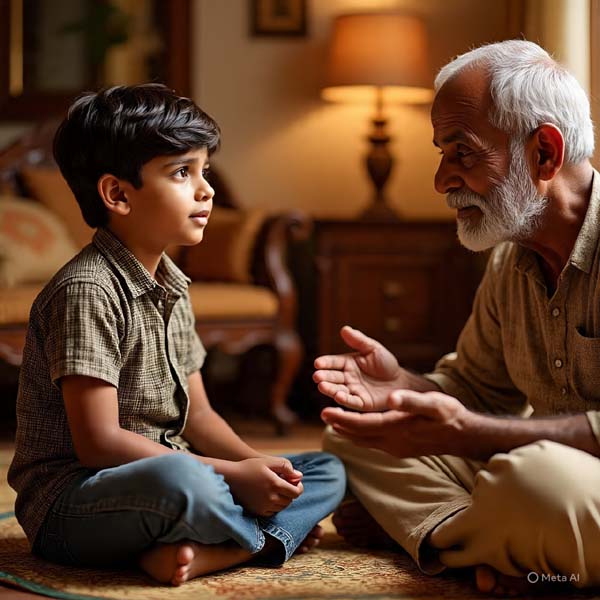
Ghost stories exist everywhere. But Kerala's supernatural tradition is widely regarded by folklore scholars as one of the most elaborate, psychologically sophisticated, and morally complex in the world. This is not an accident. It is the product of a very specific set of historical and geographical conditions that Kerala alone possesses — and of a living oral tradition that has kept these stories not as museum pieces but as active, believed, culturally functional narratives right into the twenty-first century.
Why Kerala Has the World's Richest Ghost Tradition
The Western Ghats sealed Kerala off from much of the Indian subcontinent for long stretches of history, allowing local belief systems to develop with unusual independence and internal logic. The landscape itself — monsoon-flooded rivers, dense forests, kavus (sacred groves), a 590-km coastline — created an environment where the boundary between the known and unknown world felt genuinely thin.
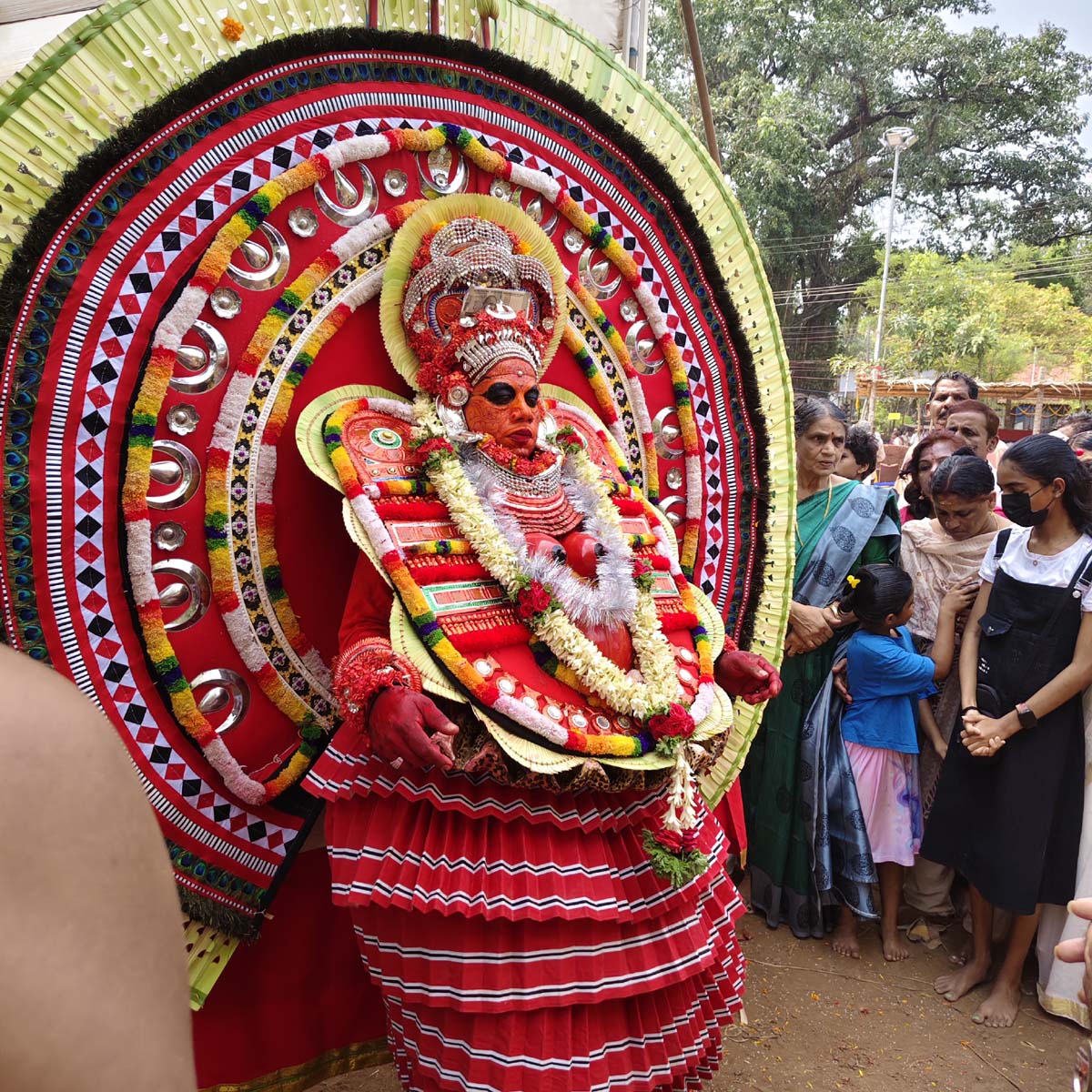
Several factors converge to make Kerala's ghost tradition uniquely rich. Its powerful oral tradition ensured stories circulated with extraordinary fidelity across generations. Its caste system's long history of injustice provided the moral raw material for ghost narratives — stories of the wronged dead demanding accountability. The coexistence of multiple religious traditions (Hindu, Christian, Muslim, and tribal belief systems) each contributed distinct supernatural figures, creating an unusually diverse spiritual taxonomy. And Theyyam — North Kerala's ritual art of spirit embodiment — created institutional, communally sanctioned forms of the same beliefs that circulate as informal ghost narratives elsewhere.
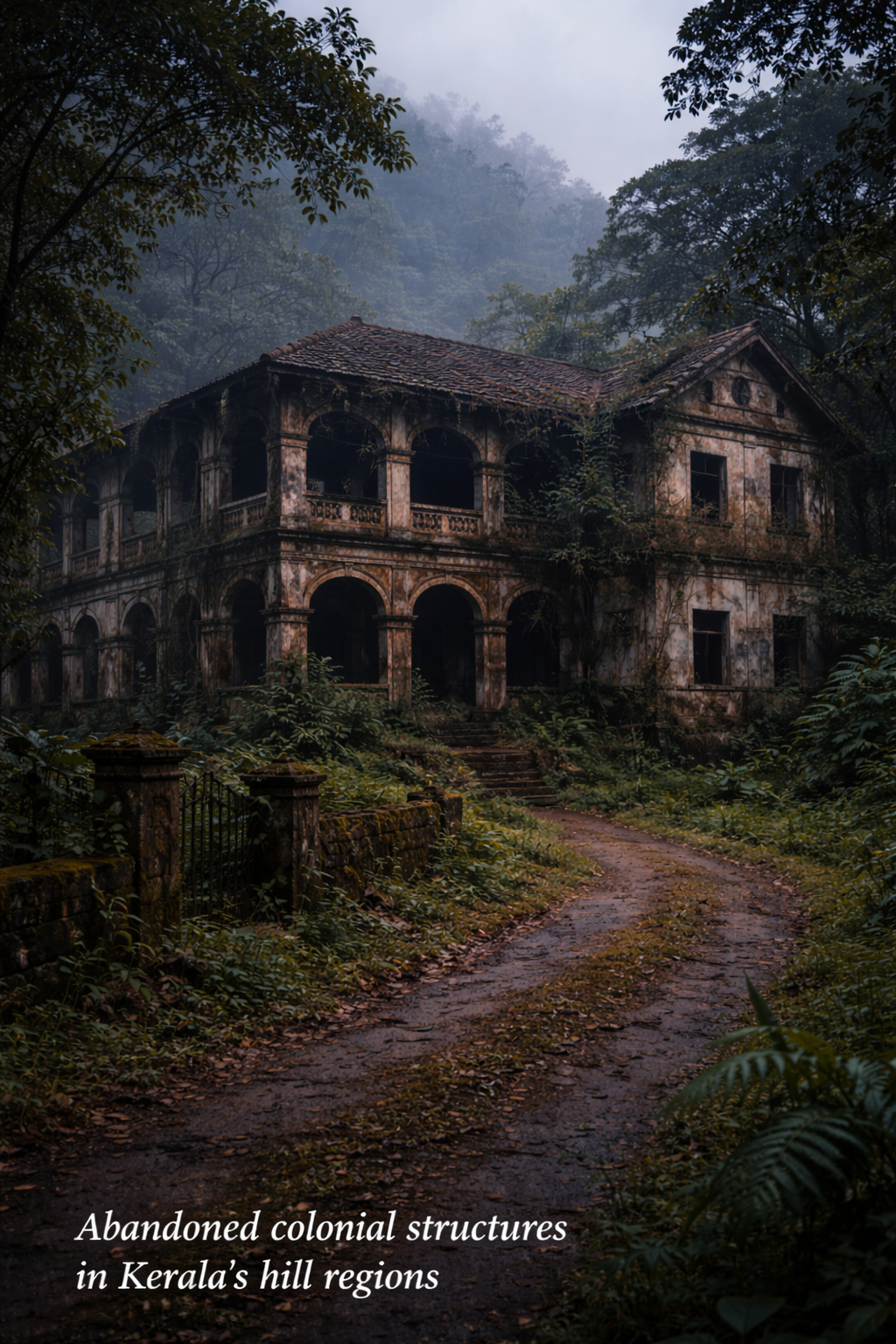
Kerala's ghost encounters are not random. They cluster with extraordinary consistency at specific liminal zones — places between categories: pala trees at forest edges, river crossings, crossroads, abandoned colonial buildings, dawn and dusk in monsoon-flooded paths. Victor Turner's concept of liminality (spaces where conventional rules are suspended) precisely explains this pattern. The supernatural becomes accessible precisely at the places and times where ordinary social order is at its weakest. For the full folklore analysis, see our article on Why Ghost Stories Exist in Every Society.
Kerala's Legendary Supernatural Figures — Who They Are & What They Mean
Kerala has developed a remarkably detailed taxonomy of supernatural beings. Where most ghost traditions have a single, somewhat generic ghost figure, Kerala has dozens — each with their own specific origin story, appearance, domain, moral function, and method of encounter. Here are the most significant.
Ask any Keralite about the supernatural and the first name they say is almost always
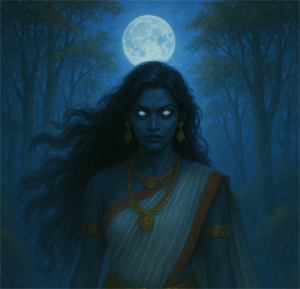
Yakshi. She appears near the pala tree (Alstonia scholaris, whose
white flowers bloom with an intoxicating fragrance at dusk), extraordinarily beautiful,
in a white sari, her long black hair loose. She approaches lone male travellers at night.
Those who follow her rarely return unchanged — or at all.
But the Yakshi is not simply a monster. Folklore scholars note that she is frequently
portrayed as a woman betrayed, murdered, or subjected to extreme injustice
— her transformation into a lethal spirit is the direct consequence of human cruelty.
She is simultaneously a safety warning (don't travel alone at night), a moral verdict
(injustice does not go unanswered), and a cultural memory of how society has historically
treated women. The Yakshi endures because she carries all three messages at once.
Kalliyankattu Neeli is Kerala's most documented and historically studied
ghost figure — a woman betrayed, killed, and her body disposed of in a river,
who returns as a powerful supernatural presence. Unlike the Yakshi who relies on
seduction, Neeli is remembered for relentless, methodical pursuit of vengeance.
She haunts lonely roads, river edges, and abandoned houses, revealing her true
terrifying form only after gaining the victim's trust.
Neeli appears in Villadichan folk songs, in the historical novel
Marthandavarma by C. V. Raman Pillai, and in dozens of oral traditions
across Travancore. Remarkably, she is also now worshipped as a mother goddess
at a temple in Panchavankaadu, Thiruvananthapuram — the transition from feared ghost
to protective deity is one of Kerala's most significant supernatural patterns.
She encodes deep cultural anxiety about unpunished crimes and moral hypocrisy.
The Odiyaan is not a ghost but a living person believed to possess the power to
shapeshift — most commonly into animals — and cause death or serious harm from a
distance through dark ritual practice. Odiyaanmar (plural) are feared
more than conventional ghosts because they represent deliberate malice
by a living person rather than unresolved emotion from the dead.
These narratives externalise fear of unusually powerful, unpredictable community
members who appear to operate outside normal social rules and suffer no visible
consequences. The 2018 Malayalam film Odiyan (directed by V. A. Shrikumar
Menon, starring Mohanlal) brought these beliefs to mass audiences. The film's
extraordinary commercial success demonstrated how deeply Odiyaan narratives
remain embedded in contemporary Malayalam cultural consciousness.
The Brahmarakshas is created when a member of the Brahmin (priestly-scholarly)
class misuses knowledge, neglects spiritual duty, or dies with unfulfilled
obligations. It represents the inverse of everything a Brahmin is supposed
to embody — the corruption of intellectual and spiritual authority rather than its
proper exercise.
These figures haunt locations associated with learning and temples, often appearing
hanging upside down from trees, demanding resolution before they can be released.
The Brahmarakshas narrative encodes a sophisticated community judgement: that
power and knowledge carry moral obligation, and that their abuse has consequences
that outlast the body.
One of Kerala's most historically specific ghost figures. Kappiri — from
the Portuguese-era term — refers to enslaved African men brought to Kerala during
the colonial period. Legend holds that these men were deliberately killed
by their masters and their bodies buried in building foundations to protect
the structures. They return as spirits bound to those buildings.
Kappiri Muthappan ghosts are associated specifically with colonial-era buildings in
North Kerala and are particularly feared around former Portuguese and Dutch
installations. From a folklore perspective, these narratives serve as community
memorials — narratively acknowledging and refusing to forget that a specific
site was the setting of historic violence and slavery, even when no official memorial
exists.
More Spirits from Kerala's Supernatural World
Kerala's spirit taxonomy extends far beyond these major figures. Here is a broader survey of supernatural beings that populate this extraordinary tradition:
- Kuttichathan & Chathaneru — A mischievous child spirit associated with both playful interference and deliberate harm. Chathaneru (stone pelting by Kuttichathan) is one of Kerala's most reported supernatural phenomena — stones falling on rooftops or passing through closed windows attributed to an invisible Kuttichathan. These narratives provide explanations for inexplicable household disturbances without requiring human agency, preserving family relationships by externalising blame.
- Pretam — The spirit of a person who died suddenly, violently, or without proper ritual rites. Pan-South Asian in distribution but with specific Kerala variants tied to death pollution beliefs and funerary practice. Associated with unexplained household disturbances and illness.
- Vetalam (Betaalam) — A powerful spirit that inhabits corpses and occupies burial grounds. Made globally famous through the Vikramaditya tales but deeply rooted in Kerala's own folk tradition. Associated with sorcerers who seek Vetalam's power for dark purposes.
- Muthappan — A deity of Kannur and Kasaragod origin who is believed to have been human and to have transcended to divine status. Accepts offerings of meat and toddy across all castes without distinction. His tradition exemplifies how the boundary between ancestral ghost and protective deity is permeable in Kerala's supernatural system.
- Maadan / Maadayi — Village-level protective spirits associated with boundary-keeping, disease prevention, and agricultural welfare. They can be propitiated through rituals but become dangerous when neglected or when boundaries are violated. Found throughout Kerala with significant regional variation in names and attributes.
- Pey / Bhootham — General terms for malevolent supernatural entities in the Tamil-influenced regions of South Kerala. Pey are typically described as unintelligent, aggressive spirits that cause illness and misfortune and can be driven away through specific ritual responses.
Haunted Places of Kerala — The Geography of Fear
Ghost stories in Kerala are never abstract. They are always tied to named, locatable places — roads you can drive down, buildings you can visit, rivers you can stand beside. This geographical anchoring is one of the most powerful features of Kerala's supernatural tradition. Once a place acquires a haunted reputation, every unexplained sound and shadow confirms what is already known.
| Location | District | Primary Narrative | Folklore Function |
|---|---|---|---|
| Bonacaud Estate & Morris Bungalow | Thiruvananthapuram | British colonial-era bungalow; children of the original owners died mysteriously; child spirit sightings reported; sound of glass breaking and crying at night | Colonial history memorial; community processing of historical violence through supernatural narrative |
| Gundert Bungalow (Rev. Herman Gundert's residence) | Kannur (Thalassery) | 19th-century missionary residence where the first comprehensive Malayalam dictionary was compiled; reported apparitions in the upper floors; shadow movements | Cultural ambivalence about colonial-era knowledge production; the complex legacy of missionary presence in Kerala |
| NH 66 near Chavara | Kollam | Female apparition reported by multiple drivers at the same hairpin bend; often described as appearing suddenly in headlights and disappearing; linked to a road accident death | Road safety warning narrative; the specific location (hairpin bend, poor visibility) is genuinely dangerous; supernatural attribution ensures the warning is remembered |
| Peralassery Temple Pond | Kannur | Sacred pond associated with supernatural sightings at dawn and dusk — classic liminal times; water spirits, light phenomena, shadow figures at the pond's edge | Reinforcement of ritual protocols around sacred water bodies; spatial sanctification through supernatural associations |
| Kalliyankattu Neeli's River Routes | Thiruvananthapuram (Travancore) | Specific river crossings and forest paths associated with Neeli encounters; the routes where she was said to have been murdered and where she haunts | Preservation of the historical narrative of injustice; moral memorialisation through repeated supernatural encounter reports |
Go deeper into the scholarship behind why ghost stories exist and what they do — from William Bascom's foundational folklore theory to global studies of ghostlore, spirit traditions, and the psychology of fear narratives. General folklore and supernatural studies — titles may not be specific to Kerala.
Browse on Amazon →Affiliate link — we earn a small commission at no extra cost to you.
Real Ghost Encounter Narratives — How Folklore Becomes Personal Memory

A striking feature of Kerala's supernatural tradition is not just that ghost stories exist — it is how they circulate. The stories that feel most real are not the ancient legends. They are the ones that happened to someone your friend knows, on a road you drive every week, in a building you pass every morning.
Folklore scholarship recognises these as contemporary legends — personal experience narratives that gradually detach from their original witness and enter collective memory. The process is always the same: the story starts with a specific person and moment, then slowly loses its narrator while keeping its location. The name of the road, the curve in the river, the bend in the forest path — these remain fixed as the human witness fades. The place remembers even when the person is forgotten.
Folklore scholarship identifies contemporary legends — personal experience narratives gradually detached from their original witness — as among the most culturally active forms of ghost story. The location remains stable even as the narrator fades: the specific road, the river bend, the colonial building corner becomes the story's anchor in community memory. Kerala's dense settlement patterns and strong oral tradition create ideal conditions for this kind of living, place-specific supernatural memory to accumulate and persist.
The encounter narrative typically follows a structure that folklore scholars call the memorat — a first-person account of a supernatural experience that the narrator presents as genuine personal memory. In Kerala's oral tradition, memorats cluster around specific narrative types: the helpful stranger who vanishes (often revealed to be a spirit), the warning voice heard at a dangerous moment, the figure seen in headlights that disappears, the familiar face that appears where it cannot possibly be. Each type corresponds to a distinct supernatural figure and a distinct moral or safety message.
What Kerala's Ghost Stories Are Actually Doing — A Folklore Analysis
It would be convenient, and wrong, to dismiss Kerala's ghost stories as the superstition of a pre-modern culture that modernity will eventually eliminate. In fact, the opposite is happening. As Kerala's society has modernised — urbanising, digitising, and globalising at extraordinary speed — its ghost stories have not retreated. They have migrated. From village to city. From grandmother's fireside to YouTube channel. From oral community to WhatsApp group. The tradition is not dying. It is changing medium.
This persistence is not irrational. Ghost stories perform six specific social and psychological functions that rational discourse alone cannot replicate: safety education through narrative consequence, moral enforcement (the wronged dead demand accountability), grief processing (cultural frameworks for the felt presence of the deceased), community cohesion (shared fear bonds communities), social critique (supernatural retribution for powerful wrongdoers), and ecological knowledge encoding (dangerous environments represented as supernatural hazards). For the full analysis, see our dedicated article on the folklore perspective on ghost stories.
"Ghost stories do not survive for millennia despite being irrational. They survive because they are doing rational, essential, irreplaceable work — and have always been."
Kerala's Ghosts in the Digital Age

Kerala's supernatural folklore has made a remarkably successful transition into digital media. YouTube horror channels dedicated to Kerala's ghost stories — particularly Yakshi, Neeli, and Odiyaan — attract millions of views. Short films about Kalliyankattu Neeli and Kappiri Muthappan have become viral content. WhatsApp forwards carry localised ghost stories — new sightings, encounter narratives, photographs — in patterns identical to the oral transmission of traditional legends.
The 2025 Malayalam horror-comedy film Sumathi Valavu Hantu is one of many recent productions drawing on traditional ghost narratives for contemporary horror storytelling. The broader Malayalam horror genre — which has produced numerous critically acclaimed films in the past decade — draws consistently from the same supernatural figures discussed in this article, demonstrating their continued cultural vitality.
Digital platforms have not killed Kerala's ghost tradition. They have given it unprecedented reach. A Yakshi story that once circulated within a single village now circulates globally through the Malayali diaspora's digital networks — reaching Kerala communities in Dubai, London, Toronto, and Sydney. The supernatural geography of Kerala travels with its people.
Frequently Asked Questions About Kerala's Ghost Stories
What is the most famous ghost in Kerala?
Who is Kalliyankattu Neeli?
What is the Odiyaan in Kerala folklore?
What are the most haunted places in Kerala?
What is Kappiri Muthappan?
Why do ghost stories cluster around abandoned colonial buildings in Kerala?
References & Academic Sources
- 1Dégh, Linda. Legend and Belief: Dialectics of a Folklore Genre. Indiana University Press, 2001.
- 2Brunvand, Jan Harold. The Vanishing Hitchhiker: American Urban Legends and Their Meanings. W. W. Norton, 1981.
- 3Blackburn, Stuart. Print, Folklore, and Nationalism in Colonial South India. Permanent Black, 2003.
- 4Gordon, Avery F. Ghostly Matters: Haunting and the Sociological Imagination. University of Minnesota Press, 1997.
- 5Turner, Victor. The Ritual Process: Structure and Anti-Structure. Aldine Publishing, 1969.
- 6Freud, Sigmund. "The Uncanny." The Standard Edition of the Complete Psychological Works, Vol. XVII. Hogarth Press, 1919.
- 7Bascom, William R. "Four Functions of Folklore." Journal of American Folklore, 67, no. 266 (1954): 333–349.
- 8Das, Neethu K. "The Aphrodisiac Ghost of Kerala: Telling and Retelling the Yakshi Tales." The Literary Herald, December 2021.
- 9Wikipedia. "Kalliyankattu Neeli." en.wikipedia.org.
- 10Balan, Athira. "Kalliyankattu Neeli temple dedicated to the yakshi who shaped Kerala's folklore." News18 Malayalam, 20 September 2025.