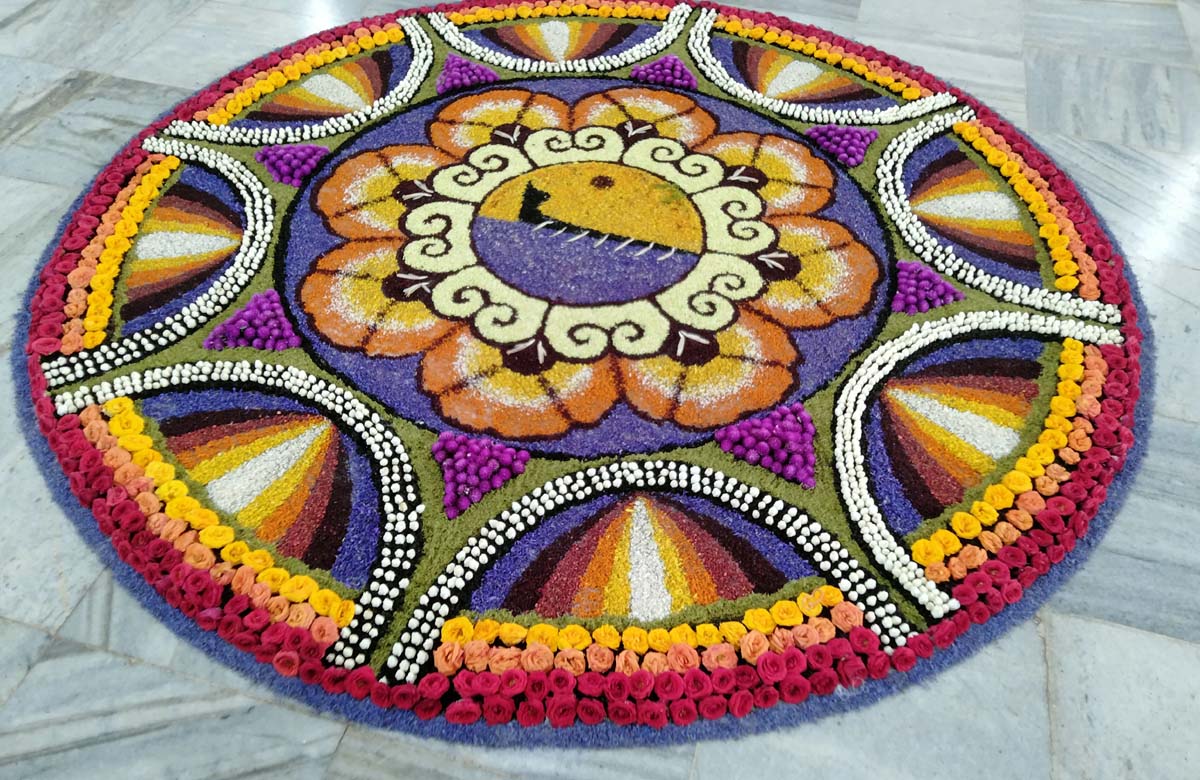
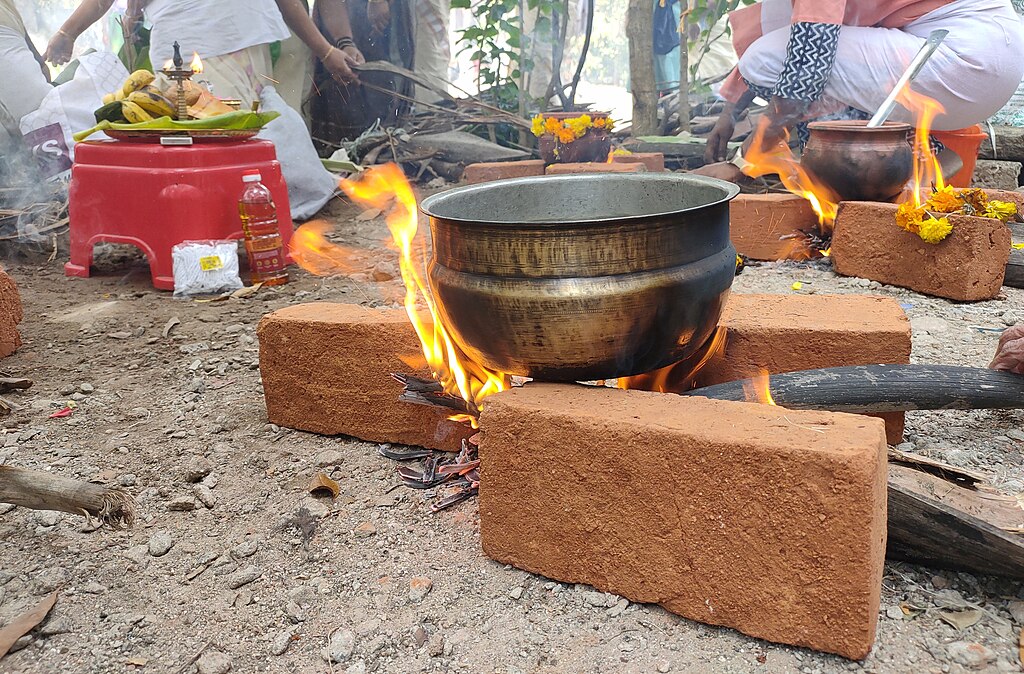
Every great religious tradition contains one place that refuses to be tamed by architecture. In Kerala, that place is Kottiyoor. The Vaishakha Mahotsavam — a 28-day annual pilgrimage in the eastern hills of Kannur district — takes place at a shrine that exists for only those 28 days. No permanent building. No stone walls. No roof over the deity. Just a Swayambhu Shivalinga on river stones, surrounded by the monsoon-filled Thiruvanchira pond, in an 80-acre sacred grove the Kerala government has designated a wildlife sanctuary. Tens of thousands of pilgrims wade the Bavali River barefoot to reach it. And then, when the festival ends, the shrine is completely dismantled and the forest reclaims its ground.
Kottiyoor Vaishakha Mahotsavam — Kerala's Most Extraordinary Pilgrimage
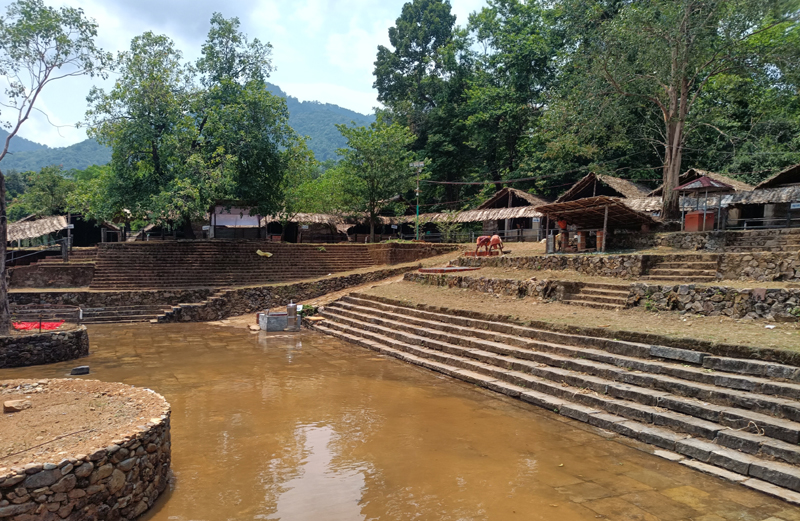
The Kottiyoor Vaishakha Mahotsavam (also written Kottiyoor Vysakha Mahotsavam) is an annual 28-day Hindu pilgrimage held at Kottiyoor in Kannur district, North Kerala. It typically runs from the Chothi or Swati asterism of the Malayalam month of Edavam (May) to the Chithira asterism of Midhunam (June-July) — coinciding with the early monsoon season.
The pilgrimage is known as "Dakshina Kashi" — the Varanasi of the South — a designation that captures its place in Kerala's spiritual geography as a site of supreme Shaiva sanctity. Unlike most major pilgrimages, which centre on permanent temples with elaborate architectural structures, Kottiyoor's primary venue, Akkare Kottiyoor, exists as a temporary sacred space — rebuilt every year and dismantled every year. This radical impermanence is not a limitation but the theological core of the entire festival.
Three things make Kottiyoor unlike any other temple festival in India: its temporary shrine (rebuilt from natural materials annually, then dismantled); its deliberate absence of entertainment (no cultural performances — only Vedic recitation and ritual); and its mandatory barefoot river crossing to reach Akkare Kottiyoor. The act of wading the Bavali River is not incidental — it is part of the pilgrimage itself.
The Myth — Daksha Yaga, Sati's Sacrifice, and Shiva's Rage
The Kottiyoor Vaishakha Mahotsavam is inseparable from one of Hindu mythology's most dramatic cosmic narratives: the Daksha Yaga — a story of pride, sacrifice, cosmic rage, and divine reconciliation.
Daksha, a Prajapati and son of Brahma, organised a grand yajna (sacrificial ritual) but deliberately excluded his son-in-law Lord Shiva — disapproving of Shiva's ascetic lifestyle and unconventional nature. Sati, Daksha's beloved daughter and Shiva's consort, chose to attend despite Shiva's explicit warning. Upon her arrival, she was publicly humiliated and insulted by her father in the presence of all assembled deities and sages. Unable to bear the disgrace to her husband, Sati immolated herself in the sacrificial fire — an act of protest, grief, and cosmic sacrifice whose consequences reordered the universe.
The news of Sati's death ignited Shiva's cosmic rage. He tore a lock of hair from his head and struck it against the ground, from which emerged the formidable Veerabhadra and Bhadrakali — fierce divine warriors who descended on the yajna, decapitated Daksha, and scattered the assembled deities. The Bhutaganas (Shiva's spirit attendants) added their own vengeance — plucking the beard of Sage Bhrigu as a war trophy.
"Akkare Kottiyoor is believed to be the precise location where Sati Devi immolated herself in Daksha's sacrificial fire. The Ammarakkal Thara — a circular sacred platform within the Akkare Kottiyoor complex — marks the spot itself. Like the Swayambhu Linga, it remains free of permanent architectural construction, preserving its raw, mythical sanctity."
— KeralaFolklore.com, drawing from Kottiyoor Devaswom traditionTo restore cosmic order, Brahma and Vishnu implored Shiva to temper his fury. The pivotal moment of reconciliation — Vishnu embracing Shiva to pacify his profound grief — is ritually re-enacted every year at Kottiyoor in the Rohini Aradhana ceremony. Daksha was subsequently resurrected with the head of a ram (symbolising humility and the consequences of arrogance), and the yajna was permitted to be completed.
Akkare and Ikkare — The Two Temples and Their Sacred Geography
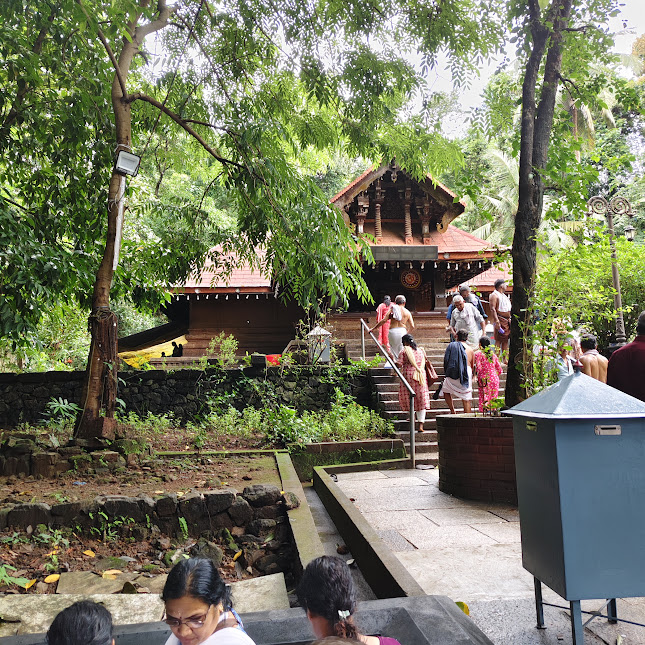
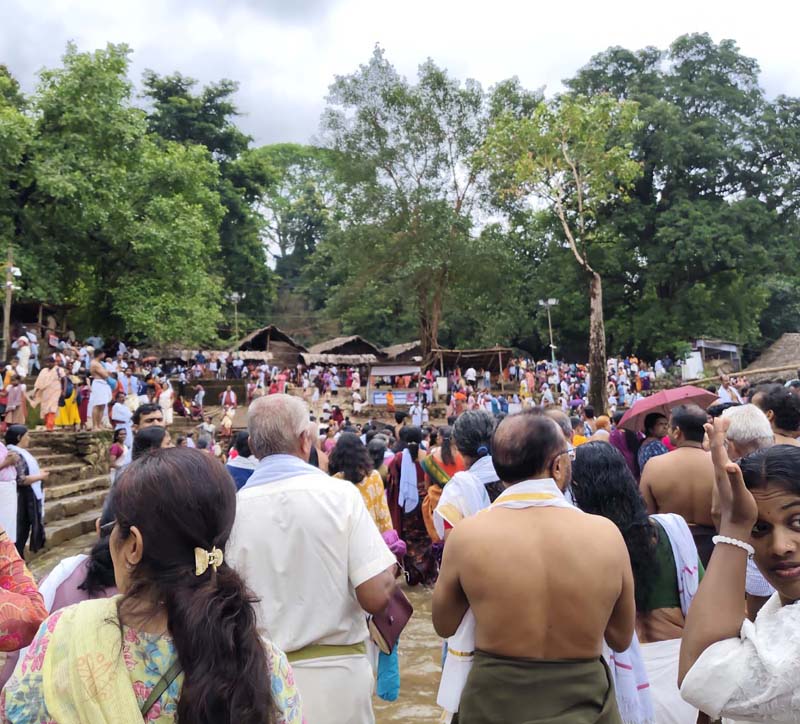
The Kottiyoor complex consists of two temples on opposite banks of the Bavali River, each serving a distinct sacred function determined by the festival calendar:
- Akkare Kottiyoor — the primary pilgrimage site, on the eastern bank. Open only during the 28-day festival. A temporary Yajna Bhoomi (sacred hermitage) built annually from biodegradable materials. Contains the Swayambhu Shivalinga on its Manithara river-stone platform, the Ammarakkal Thara (site of Sati's immolation), and the Thiruvanchira pond. The Akkare complex, viewed aerially, is said to resemble a Shivalinga in form.
- Ikkare Kottiyoor — the permanent temple on the western bank, also known as Vadakkeshwaram or the Thruchherumana Temple. Operates year-round for daily Shiva and Parvathi worship — but closes completely during the Vaishakha Mahotsavam, signifying the ritual shift of divine presence to the temporary shrine.
The closing of the permanent temple during the festival period is theologically significant. It says, unambiguously: for these 28 days, the divine is not in the building. The divine is across the river, in the forest, in the temporary shrine that will not be there next month. This inversion of the usual relationship between permanence and sanctity is Kottiyoor's most radical spiritual statement.
The Key Rituals — Each One a Chapter of the Daksha Yaga Story
What distinguishes the Kottiyoor Vaishakha Mahotsavam from virtually every other Kerala temple festival is the complete absence of entertainment programmes. No cultural performances, no music concerts, no celebrity appearances. Only Vedic recitation, ritual, and the quiet intensity of collective devotion. Every ceremony is a direct, embodied re-enactment of the Daksha Yaga myth.
| Ritual Name | What Happens | Mythological Connection |
|---|---|---|
| Vaal Yezhunnallath | Ceremonial procession of a sacred sword from Muthirerikavu in Wayanad to Kottiyoor — the festival's opening act | Symbolises the arrival of the divine goddess and the commencement of sacred activities; represents Shiva's wrath in the Daksha Yaga narrative |
| Neyyattam | Pouring of sacred ghee (clarified butter) over the Swayambhu Shivalinga — performed exclusively by the Thammangadan Nambiar family as their hereditary right | Formal commencement of the festival; activation of the deity's cosmic energy; the first sacred offering of the season |
| Bhandaram Ezhunnallath | Grand procession on Visakham star day transporting gold, silver vessels, and sacred ornaments from Manathana village to Kottiyoor | Commemorates the original preparations for Daksha's grand yajna before its catastrophic destruction; offering of wealth and humility before the deity |
| Elaneer Vayppu & Elaneerattam | Offering of thousands of tender coconuts (elaneer); the following day, the collected coconut water is poured over the deity by the chief priest | Purification and spiritual completion; it is believed Lord Shiva himself consumes this sacred coconut offering |
| Rohini Aradhana | The senior-most Kurumathoor Brahmin (ritually considered an embodiment of Vishnu) physically embraces the Swayambhu Shivalinga — unique to Kottiyoor, found at no other temple | Direct re-enactment of Vishnu pacifying Shiva's cosmic grief and rage after Sati's death; the ritual of divine reconciliation that restored cosmic order |
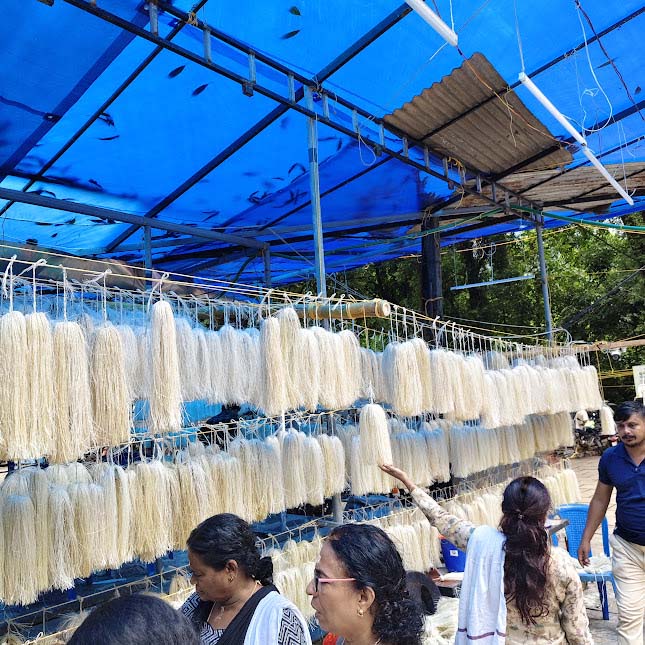
| Odapoo Distribution | Handcrafted bamboo flowers given as sacred prasadam to all pilgrims | Symbolises Daksha's beard plucked by Shiva's Bhutaganas as a war trophy; devotees display it at home as divine protection |
| Kalam Varavu | Four Nellooranmaar families bring pots for the Kalam pooja from Nallur village — performed at night in complete darkness, pot-bearers wearing only leaves | Sacred secret ritual; one of the most ancient and clandestine acts of worship; intended for divine observation only |
| Sayana Pradakshinam | Devotees physically roll their bodies through the water-filled Thiruvanchira pond in circumambulation | Complete surrender and humility; performed "in the centre of consciousness"; the ultimate act of personal dissolution before the divine |
| Thrikkalashaattu | The ceremonial return of the Mutherri Vaal (sword) to Muthirerikavu; the festival's formal conclusion | Restoration of cosmic order after the Daksha Yaga; the sacred period is closed |

Pilgrims at Kottiyoor observe the same tradition as at all of Kerala's great temple festivals — wearing traditional white cotton with the iconic gold zari Kasavu border. The handwoven Kerala Kasavu saree is the most graceful expression of devotional attire in Kerala's festival culture. Authentic pieces available on Amazon.
Shop Kerala Saree →Affiliate link — we earn a small commission at no extra cost to you.
Community and Hereditary Roles — How 64 Castes Build One Festival
One of the Kottiyoor Vaishakha Mahotsavam's most remarkable social dimensions is the extraordinary breadth of community participation — not as undifferentiated devotees but as bearers of specific, hereditary ritual duties assigned to each community by the Kottayam (Pazhassi) royal family centuries ago.
As many as 64 Hindu castes have assigned roles, with specific families holding exclusive rights to particular ritual acts — rights that have been maintained unchanged for generations. Some communities walk over 100 kilometres on foot to bring their contribution. The system creates a social structure where the festival is genuinely co-owned by the entire community rather than managed by a single priestly caste or institution.
| Community / Family | Hereditary Role | Associated Ritual |
|---|---|---|
| Kurumathoor Brahmins | Senior-most member (as embodiment of Vishnu) performs the Rohini Aradhana — the unique embrace of the Shivalinga | Rohini Aradhana |
| Thammangadan Nambiar Family | Exclusive right to be the first to offer ghee for the Abhishekam during Neyyattam, initiating the festival's formal commencement | Neyyattam |
| Nellooranmaar (Kulalaya Caste) | Four families carry pots from Nallur village for the Kalam pooja — at night, in darkness, wearing only leaves on approach to Akkare Kottiyoor | Kalam Varavu |
| Kurichya Tribals | Credited in legend with discovering the Swayambhu Shivalinga while hunting, thereby initiating the festival's revival; maintain sacred connection to the site's tribal origins | Festival's origin legend |
| Manathana Village | Supplies the gold and silver vessels and ornaments for the Bhandaram Ezhunnallath procession | Bhandaram Ezhunnallath |
| Pullancheri Illam | Prepares Pori (puffed rice) as sacred offerings, handed to the temple via the Narasimhaswamy temple near Muzhakunnu | General offerings |
| Muthirerikavu, Wayanad | Origin of the ceremonial sword (Vaal) that initiates the festival and is returned to conclude it | Vaal Yezhunnallath & Thrikkalashaattu |
Critically, the Kottiyoor pilgrimage includes tribal communities in roles of foundational spiritual significance — not merely as peripheral participants but as the tradition's origin-keepers. The Kurichya tribal legend of discovering the Swayambhu Linga positions indigenous communities as the primal discoverers of the sacred site, making Kottiyoor one of the few major Kerala temple festivals where tribal heritage is central to — not marginal from — the official mythological and ritual tradition.

Like Kottiyoor, the Aranmula Kannadi represents Kerala's deepest tradition of sacred craft — the world's only metal-alloy first-surface mirror, GI-protected, one of the Ashtamangalyam's eight auspicious objects, and an essential element of the Vishukkani arrangement. A meaningful gift from Kerala's living spiritual heritage.
View on Amazon →Affiliate link — we earn a small commission at no extra cost to you.
Eco-Spiritual Significance — The Festival That Leaves No Trace
The Kottiyoor Vaishakha Mahotsavam presents a model of religious observance that contemporary environmental thinkers have described as a pre-modern example of sustainable sacred design. Every structural element of Akkare Kottiyoor is built from locally sourced biodegradable materials — bamboo, palmyra leaves, coconut fronds — and every element is returned to the earth when the festival concludes. No concrete, no metal, no permanent alteration of the landscape.
The festival's integration with the monsoon season is not incidental. The Bavali River's monsoon flood fills the Thiruvanchira pond to the depth required for the Sayana Pradakshinam (rolling circumambulation) and provides the flowing water for ritual ablutions. The monsoon's arriving rains coincide with the festival's timing as if by design — which, in the tradition's understanding, it is. The festival is scheduled around natural cycles, not despite them.
The 80-acre sacred grove surrounding Akkare Kottiyoor has been formally designated a wildlife sanctuary by the Kerala government — an unusual status that reflects both the area's biodiversity and the long-term ecological protection that centuries of religious reverence have provided. The grove's designation as both sacred and protected creates a dual framework of conservation that has kept the forest intact in a region where human agricultural pressure is significant.
Visiting Kottiyoor — A Practical Guide for Pilgrims and Travellers
The Kottiyoor Vaishakha Mahotsavam 2025 runs for 28 days from the Chothi/Swati asterism of Edavam through Chithira of Midhunam — typically late May to late June 2025. Exact dates are announced by the Kottiyoor Devaswom Board. For official dates: kottiyoordevaswom.com. Entry to Akkare Kottiyoor is available only during the 28-day festival period.
- Location: Kottiyoor, Kannur district, Kerala — in the eastern hills near the Western Ghats, approximately 80 km from Kannur city and 30 km from Mananthavady (Wayanad)
- Nearest railway: Thalassery (60 km) or Kannur (80 km) railway stations; buses from both cities to Kottiyoor
- Road access: Via Payyannur–Kottiyoor road or via Mananthavady (Wayanad side). Vehicles must park at designated stands; smaller vehicles carry pilgrims to the river crossing
- River crossing: The Bavali River must be crossed barefoot to reach Akkare Kottiyoor. This is not optional — the wading is part of the pilgrimage's spiritual experience. The crossing is typically knee-to-waist deep during the festival period
- Dress code: Traditional attire is expected — mundu or dhoti for men, saree or salwar kameez for women; footwear must be left on the western bank (Ikkare side)
- No accommodation at Akkare: There are no hotels or guesthouses at the Akkare Kottiyoor site; pilgrims typically stay in Kottiyoor village or nearby towns and walk/travel to the festival each day
- No entertainment: Unlike most Kerala temple festivals, Kottiyoor hosts no cultural programmes, music events, or commercial entertainment; the atmosphere is one of quiet, intense spiritual focus
- Best time to visit: Weekdays during the festival's middle period (days 5-20) are typically less crowded than weekends and the opening/closing ceremonies
"To reach Akkare Kottiyoor, you must wade the Bavali River. There is no bridge. There is no boat. This is not an oversight — it is the pilgrimage itself beginning."
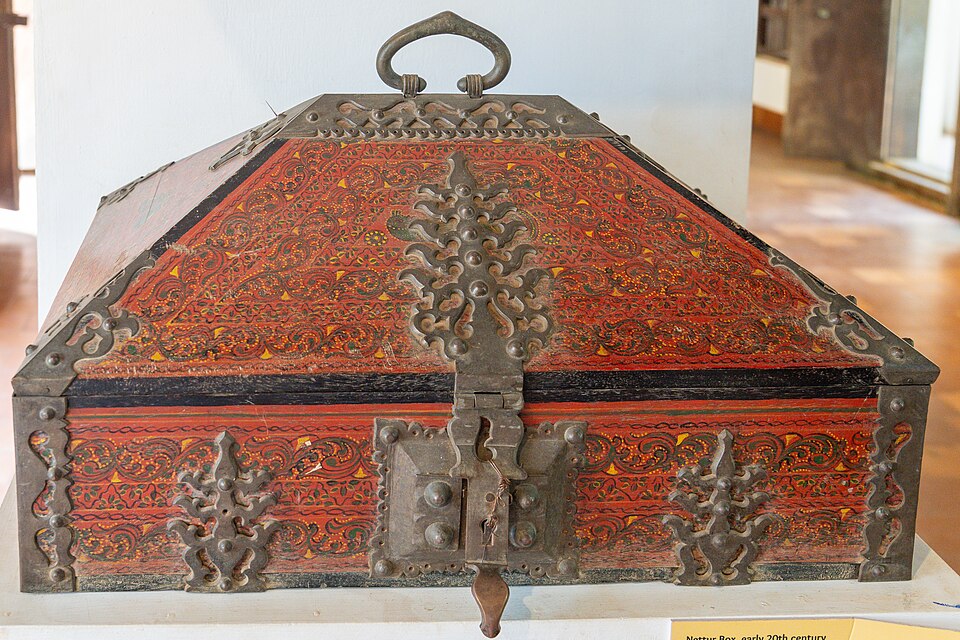
Kottiyoor is Kerala's tradition at its most ancient and uncompromising — crafted from nature, returned to nature. Kerala's traditional craft heritage shares that same philosophy: Nettur Petti, bronze ritual objects, Theyyam-inspired art. Authentic handcrafted Kerala objects, available on Amazon.
Browse Kerala Crafts →Affiliate link — we earn a small commission at no extra cost to you.
Frequently Asked Questions — Kottiyoor Festival
What is Kottiyoor Vaishakha Mahotsavam?
When is Kottiyoor festival 2025 / 2026?
What is the Daksha Yaga story at Kottiyoor?
What is Rohini Aradhana at Kottiyoor?
What is Odapoo (Odappoov) at Kottiyoor?
How to reach Kottiyoor temple in Kannur?
References
- 1Kottiyoor Devaswom Official. "Kottiyoor Vaishakha Maholsavam." kottiyoordevaswom.com.
- 2Kerala Tourism. "Kottiyoor Vaishaka Maholsavam — A Festival of Nature." keralatourism.org.
- 3Kerala Tourism. "Kottiyoor Festival." keralatourism.org.
- 4Wikipedia. "Kottiyoor Temple." en.wikipedia.org.
- 5Wikipedia. "Kottiyoor Vysakha Mahotsavam." en.wikipedia.org.
- 6KeralaFolklore.com. "Kottiyoor Vysakha Mahotsavam — Deep Dive." kottiyur-vaishakha-mahotsavam.html (original scholarly article).